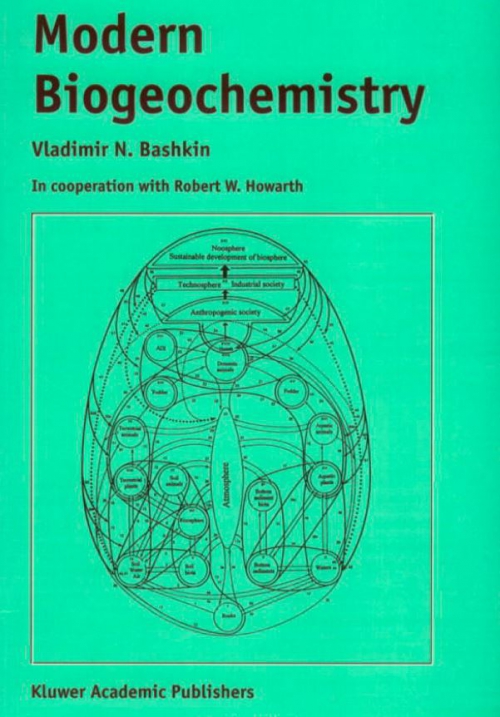
Biogeochemistry is becoming an increasingly popular subject in graduate education. Courses in ecology, geography, biology, chemistry, environmental science, public health, and environmental engineering all have to include biogeochemistry in their syllabuses to a greater or lesser extent. Humanity’s ever growing impact on the Environment, and the consequent local, regional, and global effect demand a profound understanding of the mechanisms underlying the sustainability of the biosphere and its compounds. The ideas of biogeochemistry about the universality of biogeochemical cycles involving the mass exchange of chemical elements between living organisms and the environment in the Earth’s surface appear to be quite productive in this high priority academic and scientific discipline. In biogeochemical cycling the active principles come from biota which global biological and geological activity alter slowly the biosphere’s compartments. On the other hand, the environment causes the living organisms evolve.