Добрый день, Коллеги. Важное сообщение, просьба принять участие. Музей Ферсмана ищет помощь для реставрационных работ в помещении. Подробности по ссылке
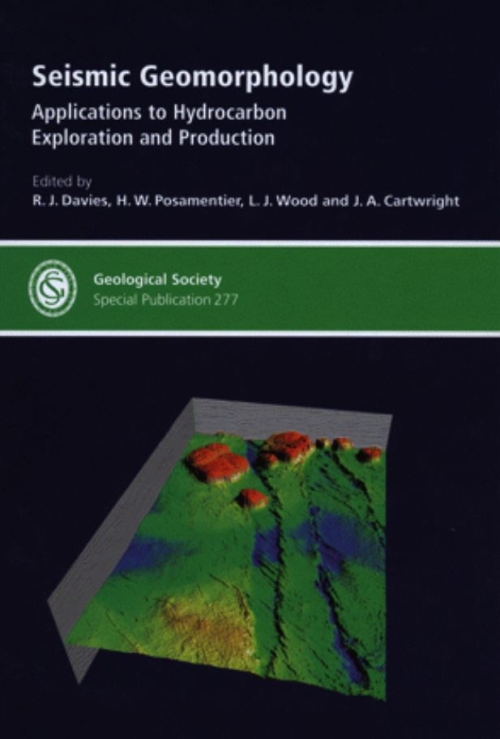
POSAMENTIER, H. W., DAVIES, R. J., CARTWRIGHT, J. A. & WOOD, L. Seismic geomorphology - an overview Back to Basics ZENG, H. Seismic imaging for seismic geomorphology beyond the seabed: potential and challenges
SIMMS, A. R., ANDERSON, J. B., MILLIKEN, K. T., TAHA, Z. P. & WELLNER, J. S. Geomorphology and age of the Oxygen isotope stage 2 (last lowstand) sequence boundary on the northwestern Gulf of Mexico continental shelf HADLER-JACOBSEN, F., GARDNER, M. H. & BORER, J. M. Seismic stratigraphic and geomorphic analysis of deep-marine deposition along the West African continental margin
Seismic hazard and risk analyses underpin the loadings prescribed by engineering design codes, the decisions by asset owners to retrofit structures, the pricing of insurance policies, and many other activities This is a comprehensive overview of the principles and procedures behind seismic hazard and risk analysis. It enables readers to understand best practises and future research directions.
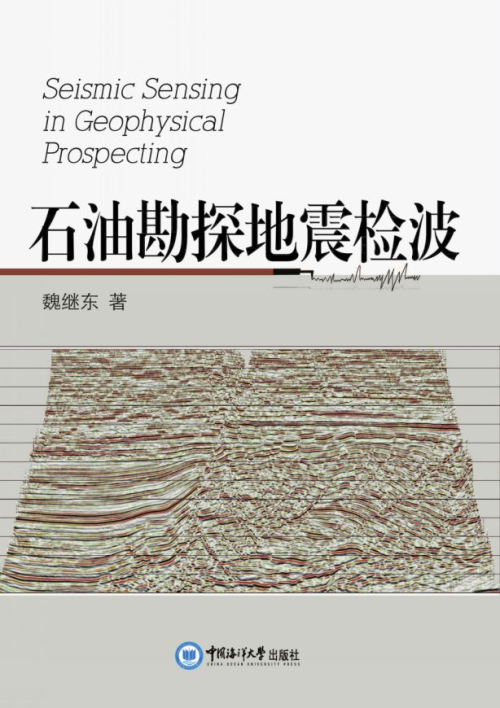
In seismic exploration activity, seismic data acquisition is the element with the largest cost. Acquisition parameters fundamentally determine, among others, resolution and data quality.
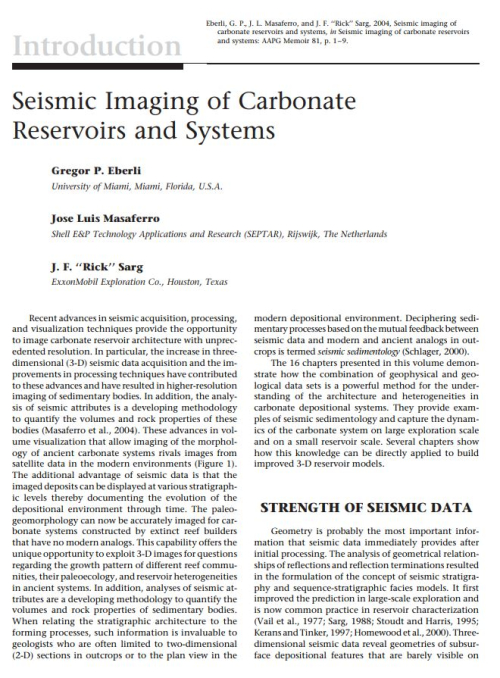
Recent advances in seismic acquisition, processing, and visualization techniques provide the opportunity to image carbonate reservoir architecture with unprecedented resolution. In particular, the increase in threedimensional (3-D) seismic data acquisition and the improvements in processing techniques have contributed to these advances and have resulted in higher-resolution imaging of sedimentary bodies. In addition, the analysis of seismic attributes is a developing methodology to quantify the volumes and rock properties of these bodies (Masaferro et al., 2004). These advances in volume visualization that allow imaging of the morphology of ancient carbonate systems rivals images from satellite data in the modern environments (Figure 1).
Seismic inversion methods in geophysics is a technique used to transform seismic reflection data into quantitative subsurface rock properties. It is methods to integrate seismic reflection data along with well log data to extract a variety of petrophysical parameters. Geophysicists regularly perform seismic surveys to collect subsurface geological information in the exploration project.
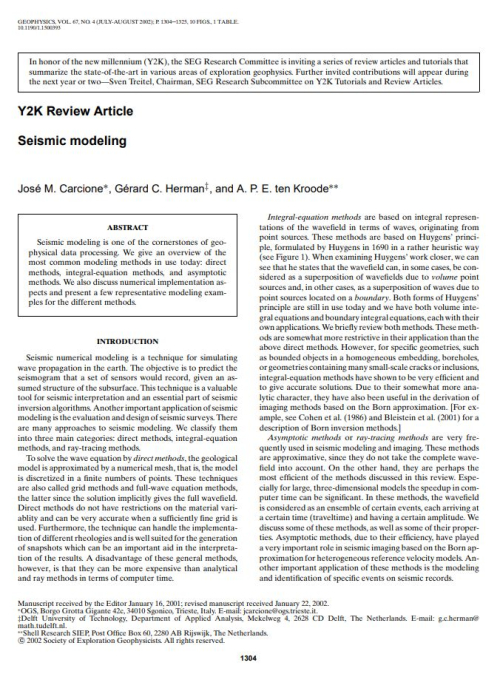
Seismic numerical modeling is a technique for simulating wave propagation in the earth. The objective is to predict the seismogram that a set of sensors would record, given an assumed structure of the subsurface. This technique is a valuable tool for seismic interpretation and an essential part of seismic inversion algorithms. Another important application of seismic modeling is the evaluation and design of seismic surveys. There are many approaches to seismic modeling. We classify them into three main categories: direct methods, integral-equation methods, and ray-tracing methods.
Application of seismic stratigraphic techniques is nowadays standard practice for interpreting seismic datasets. The advantage of seismic stratigraphy for geological studies lies in the fact that the method combines different scales of observation: large scale remote sensing seismic measurements and the high-resolution well control logging / outcrop approach (Veeken 2007). Many workers have embraced seismic stratigraphic principles to add value to their seismic observations (e.g. Payton et al. 1977, Brown and Fisher 1976 and 1980, Rochow 1981, Halbouty 1982, Berg and Woolverton 1985, Bally 1987, Wilgus et al. 1988, Ziegler 1990, Armentrout and Perkins 1991, Cramez et al. 1993, Den Hartog Jager et al. 1993, Henri 1994, Brown 1999, Cosentino 2001, Biju-Duval 2002, Davies et al. 2004, Pomerol et al. 2005, Catuneanu 2006, Miall 2010). The proposed seismic interpretation procedure represents a systematic workflow that has proven to be a very powerful prediction tool for the evaluation of the subsurface structuration <...>
Seismic risk management in many countries around the world is a subject of crucial interest to today’s societies as the destructive effects of recent powerful earthquakes cannot be overlooked or ignored. Some of these seismic disasters that have hit Sabah (Malaysia) in 2015, Gorkha (Nepal) in 2015, Northwest Ecuador in 2016, Amatrice (Italy) in 2016, and Chaiapas (Mexico) in 2018 have affected millions of people and caused severe economic losses (Parra et al. 2016; Adhikari et al. 2015; Ramirez-Herrera et al. 2018; Faenza et al. 2016). Accordingly, seismic design codes and frameworks are typically applied or improved after each earthquake disaster, but older buildings have not been updated to take advantage of these new methods, and they have shown poor behavior when subjected to the same seismic standards as newer constructions. <...>