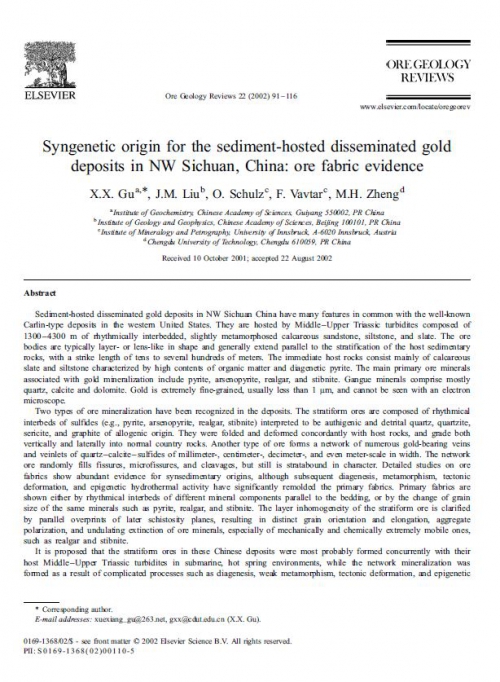
Sediment-hosted disseminated gold deposits in NW Sichuan China have many features in common with the well-known Carlin-type deposits in the western United States. They are hosted by Middle–Upper Triassic turbidites composed of 1300–4300 m of rhythmically interbedded, slightly metamorphosed calcareous sandstone, siltstone, and slate. The ore bodies are typically layer- or lens-like in shape and generally extend parallel to the stratification of the host sedimentary rocks, with a strike length of tens to several hundreds of meters. The immediate host rocks consist mainly of calcareous slate and siltstone characterized by high contents of organic matter and diagenetic pyrite. The main primary ore minerals associated with gold mineralization include pyrite, arsenopyrite, realgar, and stibnite. Gangue minerals comprise mostly quartz, calcite and dolomite. Gold is extremely fine-grained, usually less than 1 Am, and cannot be seen with an electron microscope.