Добрый день, Коллеги. Важное сообщение, просьба принять участие. Музей Ферсмана ищет помощь для реставрационных работ в помещении. Подробности по ссылке
Colloid systems may be defined as systems containing at least two components: 1) a continuous dispersing medium and 2) a disperse phase. For many years the science of colloids was concerned mainly with the description of the behavior of very small particles. The classical definition of a colloid system described the disperse phase as being comprised of particles or macromolecules smaller than 1000 nm in diameter, but larger than 1 nm. Particles smaller than 1 nm do not exist as a discrete phase, and any system containing them cannot be considered as heterogeneous.
A huge amount of data has been accumulated in the field of high-pressure mineralogy to date (Agee 1998; Stachel 2001; Akaogi 2007; Irifune and Tsuchiya 2007; Kaminsky 2012; and others). Direct study of the substance of the Earth’s mantle using data on the minerals of mantle xenolith and inclusions in natural diamonds is significantly restricted. According to the geothermobarometric estimates, most of such minerals are formed at a depth of 150–200 km, i.e., their associations characterize the P–T conditions of the upper mantle (Sobolev 1977; Sobolev et al. 1997; Taylor and Anand 2004).
The geologic history of the San Manuel-Kalamazoo deposit has provided an opportunity for the examination of vertical and horizontal zoning relationships in a porphyry copper system. Precambrian Oracle "granite," a Laramide monzonite porphyry, and a Laramide dacite porphyry are hosts to zones of potassic, phyllic, argillic, and propylitic assemblages shown to be coaxially arranged outward from a potassic core through phyllic, argillic, and propylitic zones. Alteration zones at depth comprise an outer chlorite-sericite-epidote-magnetite assemblage yielding to an inner zone of quartz-K4eldspar-sericite-chlorite. Mineralization zones are conformable to the alteration zones, the ore zone (with a 0.5% Cu cutoff) overlapping the potassic and phyllic zones.
Chromites forming giant orebodies in the southern part of the Early Palaeozoic ophiolite sequence of the Kempirsai Massif (Kazakhstan, Urals) contain a large number of inclusions, i.e. silicates, sulphides, alloys, arsenides, and fluids. The chromite orebodies are surrounded by dunite envelopes of variable thickness, which show transitional boundaries to harzburgite host rocks. The composition of ore-forming chromites in depleted mantle rocks of the southern part of the massif (Main Ore Field) is rather uniform, showing high cr-number [100Cr/(Cr+Al), 78-84] and mg-number [100Mg/ (Mg + Fe2+), 51-85] values. Smaller bodies of Al-rich spinel in the northern and western part of the massif (Batamshinsk) have variable cr-number (38-60) and mg-number (50-88) values.
Let us start with a question here. Which figure in Fig. 1.1 is the most symmetric? Obviously, figure (c) in Fig. 1.1 has less symmetry than (a) and (b); however, it is difficult to compare symmetries of (a) and (b). One of the basic tools for describing symmetries of crystal structures is space groups, which describe symmetry of atoms (vertices/points) in a crystal structure. For example, the symmetry of a regular hexagonal tiling of R2 is described by the group P6m, and the space group of the symmetry of a regular three-colored hexagonal tiling (see Fig. 1.2b) is P3m1. Similarly, the group P6m describes the symmetry of a regular hexagonal lattice.
The energy of a molecule consists partly of translational energy, partly of rotational energy, partly of vibrational energy, and partly of electronic energy. For a first approximation these energy contributions can be considered separately. Electronic energy transitions normally give rise to absorption or emission in the ultraviolet and visible regions of the electromagnetic spectrum. Pure rotation gives rise to absorption in the microwave region or the far infrared. Molecular vibrations give rise to absorption bands throughout most of the infrared region of the spectrum. In this book we shall mainly be concerned with the interaction of electromagnetic radiation with molecular vibrations and rotations. <...>
The urge to make geology more quantitative has led to the widespread inclusion of chemistry, physics, and mathematics—the so-called "basic" sciences—among the required courses in undergraduate curricula. One can only applaud this practice, for certainly many of the new and exciting ideas in earth science have come from application of quantitative reasoning to geologic problems. It is reasonable to ask. however, if the mere requiring of courses in basic science is an efficient way to give most students facility in handling ideas quantitatively. For the few who take easily to mathematical symbolism, the answer would be "yes":
Актуальность работы обусловлена необходимостью оценки перспективности золоторудных проявлений в докембрийских метаморфических комплексах Алдано-Стаиового щита. В Южной Якутии до недавнего времени были известны только россыпные и гидротермальные месторождения рудного золота, образование которых происходило в эпоху тсктономагматической активизации. Открытие в метаморфических образованиях центральной я западной частях щита золотой минерализации и золоторудного месторождения им. Пинигина, локализованного в габбро-норитах, позволило по-новому подойти к оценке золоторудного потенциала докембрийских базитов этого региона.
It is an old wisdom that metals are indispensable for life. Indeed, several of them, like sodium, potassium, and calcium, are easily discovered in living matter. However, the role of metals and their impact on life remained largely hidden until inorganic chemistry and coordination chemistry experienced a pronounced revival in the 1950s. The experimental and theoretical tools created in this period and their application to biochemical problems led to the development of the field or discipline now known as Bioinorganic Chemistry, Inorganic Biochemistry, or more recently also often addressed as Biological Inorganic Chemistry. By 1970 Bioinorganic Chemistry was established and further promoted by the book series Metal Ions in Biological Systems founded in 1973 (edited by H.S., who was soon joined by A.S.) and published by Marcel Dekker, Inc., New York, for more than 30 years. After this company ceased to be a family endeavor and its acquisition by another company, we decided, after having edited 44 volumes of the MIBS series (the last two together with R.K.O.S.) to launch a new and broader minded series to cover today’s needs in the Life Sciences. Therefore, the Sigels’ new series is entitled <...>
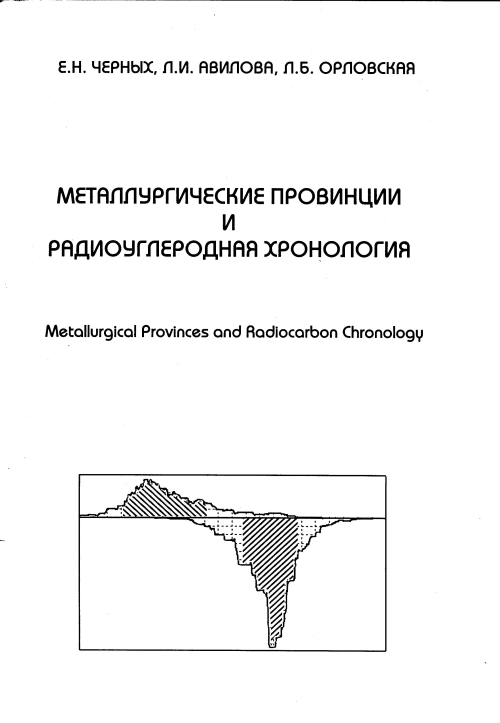
1338 радиоуглеродных датировок различных материалов VI—II тысячелетий до н.э. собраны и опубликованы авторами книги. Основная цель данной работы - установить корректную абсолютную хронологию Балкано-Карпатской и Циркумпонтийской металлургических провинций - центральных культурно-производственных систем древнейшей Евразии в Эпоху Раннего Металла. Чрезвычайно широк и территориальный охват собранных анализов: от Южного Урала до Адриатики и Эгеи, от Верхнего Поволжья вплоть до Леванта и Месопотамии. Все датировки калиброваны, систематизированы, картографированы, статистически обработаны и подразделены в работе по частным базам данных.