Добрый день, Коллеги. Важное сообщение, просьба принять участие. Музей Ферсмана ищет помощь для реставрационных работ в помещении. Подробности по ссылке
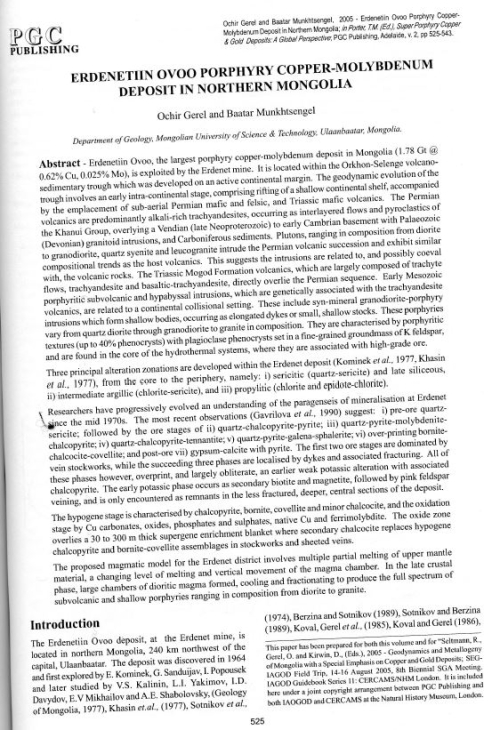
Erdenetiin Ovoo, the largest porphyry copper-molybdenum deposit in Mongolia (1.78 Gt @ 0.62% Cu, 0.025% Mo), is exploited by the Erdenet mine. It is located within the Orkhon-Selenge volcano-sedimentary trough which was developed on an active continental margin. The geodynamic evolution of the trough involves an early intra-continental stage, comprising rifting of a shallow continental shelf, accompanied by the emplacement of sub-aerial Permian mafic and felsic, and Triassic mafic volcanics. The Permian volcanics are predominantly alkali-rich trachyandesites, occurring as interlay ered flows and pyroclastics of the Khanui Group, overlying a Vendian (late Neoproterozoic) to early Cambrian basement with Palaeozoic (Devonian) granitoid intrusions, and Carboniferous sediments. Plutons, ranging in composition from diorite to granodiorite, quartz syenite and leucogranite intrude the Permian volcanic succession and exhibit similar compositional trends as the host volcanics. This suggests the intrusions are related to, and possibly coeval with, the volcanic rocks. The Triassic Mogod Formation volcanics, which are largely composed of trachyte flows, trachyandesite and basaltiotrachyandesite, directly overlie the Permian sequence. Early Mesozoic porphyritic subvolcanic and hypabyssal intrusions, which are genetically associated with the trachyandesite volcanics, are related to a continental collisional setting. These include syn-mineral granodiorite-porphyry intrusions which form shallow bodies, occurring as elongated dykes or small, shallow stocks. These porphyries vary from quartz diorite through granodiorite to granite in composition. They are characterised by porphyritic textures (up to 40% phenocrysts) with plagioclase phenocrysts set in a fine-grained groundmass of K feldspar, and are found in the core of the hydrothermal systems, where they are associated with high-grade ore.
Медно-порфировое месторождение Эскондида, Север Чили: Открытие, расположение, геология, гипогенная минерализация и гипергенная руда - Обзор
The Escondida porphyry copper deposit and its satellites are the source of ore for the world's current largest copper mine, with an installed capacity of 1.2 Mt of fine copper per annum. The published ore reserve + mineral resource at Escondida and the satellite Escondida Norte deposits at the end of 2004 totalled 2.88 Gt @ 1.13% Cu, or 10.11 Gt @ 0.70% Cu when lower grade leach and oxide ores are included. Escondida was discovered in 1981 as the culmination of an exploration program initiated in 1978. This program, the Atacama Project, was specifically targeted at locating supergene enriched porphyry copper ore within the 500 km interval between Chuquicamata and El Salvador, in the established porphyry copper belt of northern Chile.
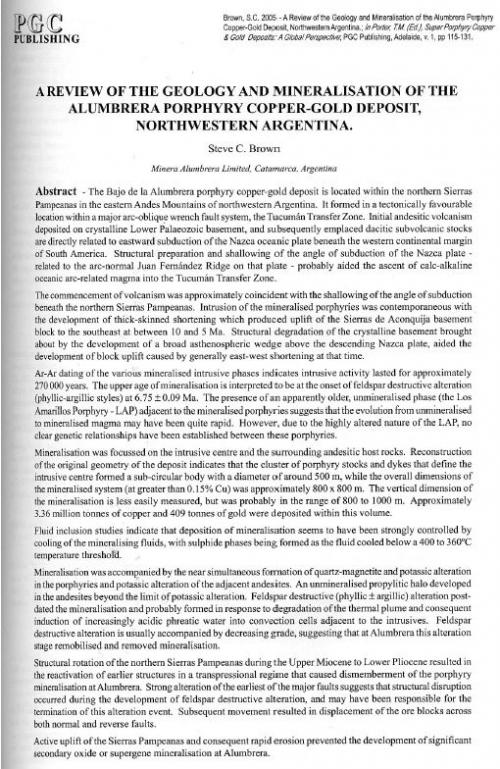
The Bajo de la Alumbrera porphyry copper-gold deposit is located within the northern Sierras Pampeanas in the eastern Andes Mountains of northwestern Argentina. It formed in a tectonically favourable location within a major arc-oblique wrench fault system, the Tucuman Transfer Zone. Initial andesitic volcanism deposited on crystalline Lower Palaeozoic basement, and subsequently emplaced dacitic subvolcanic stocks are directly related to eastward subduction of the Nazca oceanic plate beneath the western continental margin of South America. Structural preparation and shallowing of the angle of subduction of the Nazca plate -related to the arc-normal Juan Fernandez Ridge on that plate - probably aided the ascent of calc-alkaline oceanic arc-related magma into the Tucuman Transfer Zone.
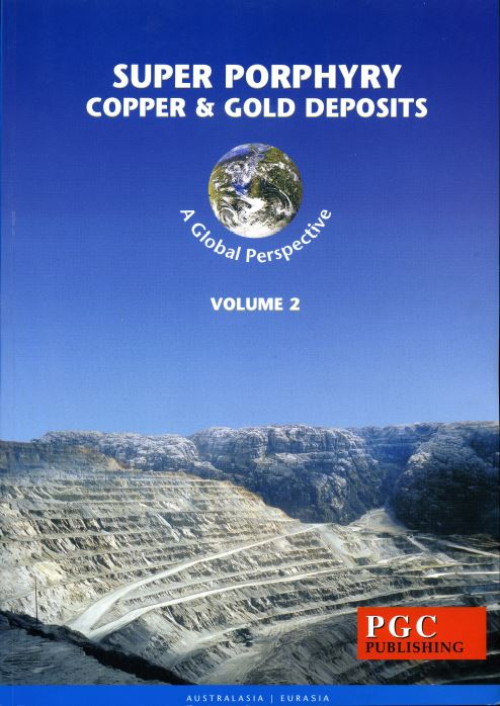
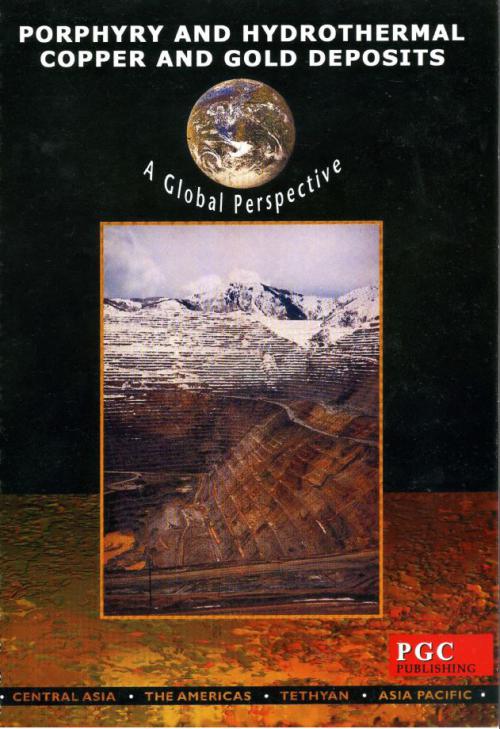
Porphyry-style Cu-Au/Mo deposits are among the most sought after targets for both base and precious metal exploration in the world today. Of particular interest are the "super porphyry" copper and or gold deposits, because of their size, grade and ability to support large scale, long life, profitable operations.
The term "super porphyry" is interpreted loosely in this publication, relating in general to the largest deposits in any established porphyry province. For a discussion of the accepted terminology and size classification of large porphyry-style deposits, see the introduction section of Richards, (2005) in this publication.
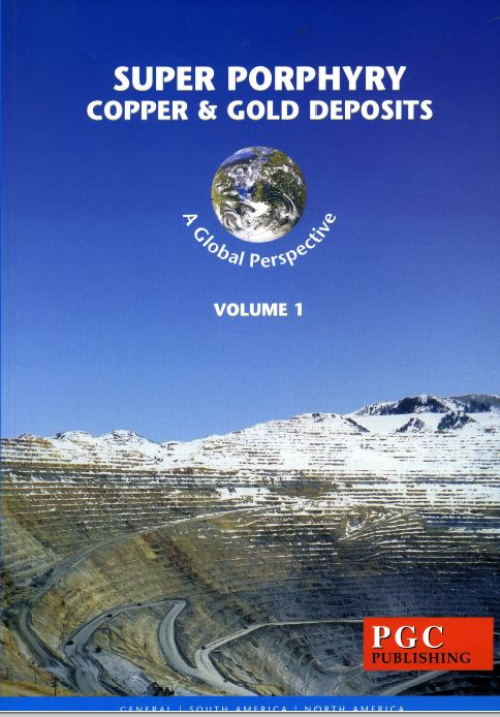
Porphyry-style Cu-Au/Mo deposits are among the most sought after targets for both base and precious metal exploration in the world today. Of particular interest are the "super porphyry" copper and/or gold deposits, because of their size, grade and ability to support large scale, long life, profitable operations.
The term "super porphyry" is interpreted loosely in this publication, relating in general to the largest deposits in any established porphyry province. For a discussion of the accepted terminology and size classification of large porphyry-style deposits, see the introduction section of Richards, (2005) in this publication.
Abstract - Hydrothermal copper & gold deposits associated with felsic intrusives, particularly porphyry related and epithermal ores, are found in a series of extensive, narrow, linear metallogenic provinces throughout the world. These are predominantly associated with the great Mesozoic to Cainozoic orogenic belts. Major deposits however, are also found within Palaeozoic orogens, while a few are known from the Precambrian. The style and setting of these deposits is variable and diverse, although many common features emerge from a global comparison.