Добрый день, Коллеги. Важное сообщение, просьба принять участие. Музей Ферсмана ищет помощь для реставрационных работ в помещении. Подробности по ссылке
С тех пор, как Н.С.Шатским была развернута идея о дисимметрич- ом строении земной коры, о различии в тектонической структуре ее Атлантического и Тихоокеанского сегментов, среди геологов нашей страны значительно усилилось внимание к изучению тектоники обрамления впадины Тихого океана. Этой проблемой систематически занимается и группа сотрудников Геологического института Академии наук СССР. В течение нескольких последних лет основные усилия этой группы были направлены на исследования особенностей тектонического строения и развития наиболее молодых тектонических зон, которые почти непрерывным кольцом опоясывают Тихий океан. Такие исследования должны приоткрыть завесу над целым рядом чрезвычайно сложных и нередко уникальных тектонических процессов, протекающих в зоне, отделяющей материки от океана. К их числу относится, например, процесс мощнейшего структурообразования, происходивший на протяжении кайнозойской эры. В высшей степени интересно изучить особенности развития современных геосинклинальных образований.
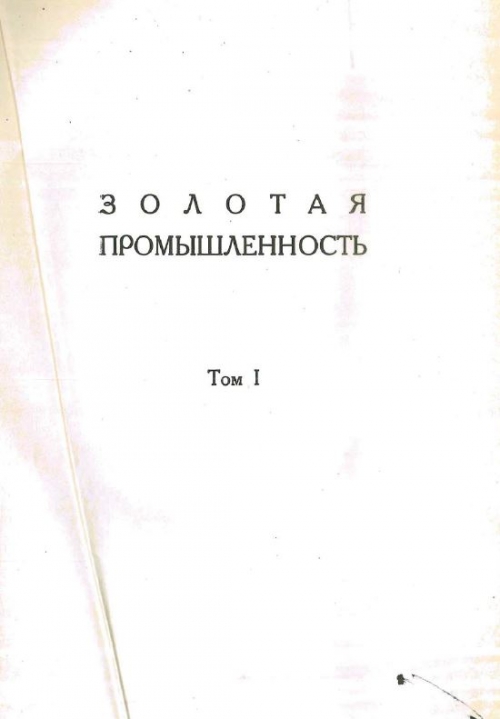
Эта книга преследует цель помочь каждому, кто работает в советской золотой промышленности, изучить наше интереснейшее дело глубоко и детально во всем комплексе вопросов сложного золотого хозяйства.
В двух томах этого труда собран почти десятилетний опыт работы моей и моих товарищей по золотой промышленности: в первом томе дается описание золотой промышленности наиболее передовых стран — США и Канады. Во втором дается не только описание наших советских золотопромышленных районов, но также основы подсчета запасов, методология горных работ, расчеты по горной механике: подъемные сооружения, транспорт, сжатый воздух, водоотлив, вентиляция и т. д.
Благодаря помощи тт. Сталина и Орджоникидзе мне удалось совершенно детально изучить золотое хозяйство Аляски и Северной Америки, где я был два раза за последние годы, а кроме того многие наши товарищи также имели возможность посетить рудники и прииски США и Канады.
В нашем Советском Союзе не осталось почти ни одного золотоносного угла, который не был бы тщательно обследован мною и моими товарищами по работе и где на основе существующих и вновь открытых запасов не были бы построены рудники, прииски, фабрики, драги, электростанции и т. д.
The geometry and distribution of the clastic dv s.es of the Ono district. North Sacramento Valley are examined within stream sections. Five traverses along dry stream beds provide good exposure allowing the spacing, thickness and geometry of the dykes to be reorded. The spatial and thickness distribution of the dykes are considered using cumulative frequency plots, allowing a visual estimation of a best lit distribution. Dyke thickness conforms best to a log-normal distribution. There is also a characteristic minimum dyke thickness in a traverse and this is attributed lo the minimum aperture thai a fluid with sand clasts is able to exploit. Dyke spacing, however, shows a good correlation with a power-law distribution for four traverses, suggesting thai there is a mechanistic control on the spatial dislribulion. Plolting dyke thickness against minimum dyke spacing reveals that thin dykes do not generally intrude in isolation. I'nlike veins and igneous dykes, elastic dykes continue lo provide preferential pathways for fluid flow, subsequent lo their intrusion, thus inhibiting intrusion in the area surrounding a pre-existing dyke. Acombination of this process and dyke branching provides the best model for the observed spatial and thickness distribution of clastic dykes seen in the Ono district. California.
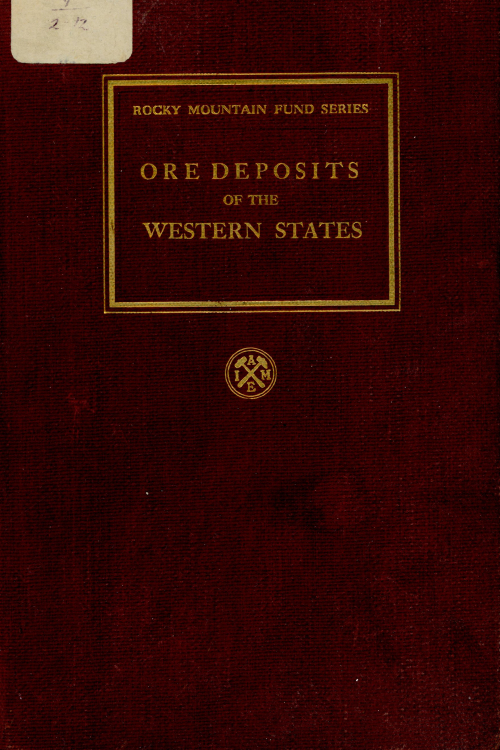
Сборник по геологии западных штатов США; посвященный пятидесятилетнему юбилею научной деятельности В. Линдгрена, представляет собой научно-теоретические обобщения наиболее выдающейся группы геологов Нового Света—самого Линдгрена, Эммонса, Боуэна Зингевальда, Кнопфа, Росса и др.
Основными темами сборника являются: выяснение связей рудных месторождений со стратиграфией, тектоникой, структурой и изверженными породами, соотношения различных типов минерализации с разнообразными изверженными породами; выявление механизма образования металлических рудных жил, роли физико-химических фактов при образовании глубинных рудных тел, химизма и истории процессов магматиче ской диференциации и связь их с рудообразованием; генезис и структура осадочных месторождений руд урана, ванадия, молибдена, радия и др.; классификация рудных месторождений и генетические ее основы. Заключительная глава сборника разбирает вопросы применения геологии к промышленности и опыт рудничной геологии.
По самому содержанию все темы продолжают развивать и обобщать идеи, обсуждавшиеся на XVI сессии Международного Геологического Конгресса 1933 г., руководимой В. Линдгреном, и суммируют научно-практический опыт, по своему значению далеко выходящий за пределы западных штатов США.
To honor the name of Waldemar Lindgren by this dedication of a volume on western ore deposits is altogether a natural and fitting tribute. For 46 years Geologist Lindgren has contributed, and contributed largely, to what the world knows of the metalliferous wealth of the Rocky Mountain region. As a Government geologist for more than a quarter of a century, he became the leader in that field of research, so that his painstaking methods of thorough field and laboratory study were made an essential part of the equipment of another generation of workers, who, in turn, added their contributions to the world's store of knowledge and of metals. Later, as a teacher in a great scientific and technical institute, Professor Lindgren has continued this leadership with an ever increasing circle of intellectual influence. This volume is at once proof of that leadership and tribute to the leader.
Equally appropriate is the linking of the name of the Rocky Mountain Club with this volume. That famous institution did not limit its interest to a simple topographic or orographic province but rather represented the traditions of the advancing western frontier and its visions of economic exploration and industrial development. As its successor in interest, the American Institute of Mining and Metallurgical Engineers has made a grant from the Rocky Mountain Fund for the publication of this volume as a research "of especial interest to the Rocky Mountain region." This use of income derived from the assets of an honored organization, which in so many ways fostered and furthered the interests of the West, will serve to perpetuate both the name and the spirit of the Rocky Mountain Club.
Waldemar Lindgren himself well illustrates one of the best phases of western development. Coming to the Rocky Mountain region as a young man, fresh from the schools of a country which has contributed to the world so many scientists and engineers, he applied his best energies to the tasks of the frontier. Success attended his efforts—not the spectacular success of a mining executive, but the more lasting success in the steady laying of foundations for a better understanding of the mineral wealth of the country by sharing his observed facts with others and passing along the torch of scientific truth. As opportunity offered, Lindgren widened his field of exploration and broadened his knowledge of ore deposits by adding Australia and South America, Mexico and Canada to his roll of scientific conquests.
It is this inspiring record of broad experience and personal attainment, both as investigator and as instructor, that makes the name of Lindgren so appropriate in its present setting; yet the enthusiastic cooperation of so many contributors to this volume is an expression of something more. " Guide, philosopher, and friend " aptly describes Waldemar Lindgren to all who have enjoyed the high privilege of close association with him. His genius has won our admiration, but it is the sincerity of intellect and kindliness of spirit that have bound to him a host of friends, some of whom have joined in this comprehensive tribute to the man and his chosen field of endeavor.
The thermal history of the Oquirrh Mountains, Utah, indicates that hydrothermal fluids associated with emplacement of the 37 Ma Bingham Canyon porphyry Cu-Au-Mo deposit extended at least 10 km north of the Bingham pit. An associated paleothermal anomaly enclosed the Barneys Canyon and Melco disseminated gold deposits and several smaller gold deposits between them. Previous studies have shown the Barneys Canyon deposit is near the outer limit of an irregular distal Au-As geochemical halo, about 3 km beyond an intermediate Pb-Zn halo, and 7 km beyond a proximal pyrite halo centered on the Bingham porphyry copper deposit. The Melco deposit also lies near the outer limit of the Au-As halo. Analysis of several geothermometers from samples collected up to 22 km north of the Bingham Canyon porphyry Cu-Au-Mo deposit indicate that most sedimentary rocks of the Oquirrh Mountains, including those at the gold deposits, have not been regionally heated beyond the “oil window” (less than about 150ºC).
Preface to SEG Compilation on Carlin-type Gold Deposits
John Muntean
Nevada Bureau of Mines and Geology
University of Nevada Reno
Since the discovery of the original Carlin gold deposit in 1961, approximately 200 million ounces of gold in Carlin-type deposits have been mined or identified in northern Nevada, making the United States one of the world’s largest gold producers for the past several decades. Despite their importance, Carlin-type deposits remain enigmatic. Controversy over their origin mainly stems from the very fine grained character of the ore and gold. Carlin-type gold deposits are largely hydrothermal replacement bodies with visually subtle alteration dominated by decarbonatization and silicification of carbonate-bearing host rocks. Gold occurs in solid solution or as submicron particles in very fine grained disseminated arsenian pyrite or marcasite. To date, over 90% of the gold mined from what most geologists would call Carlin-type deposits has come from northern Nevada, and debate exists whether similar-looking deposits elsewhere share a comparable origin or whether the deposits in Nevada represent a unique occurrence.