Добрый день, Коллеги. Важное сообщение, просьба принять участие. Музей Ферсмана ищет помощь для реставрационных работ в помещении. Подробности по ссылке
Since the first edition of Physical Geology was published in 1979, the field of geology has expanded in many ways: new technologies, new understanding of Earth processes, and new fields of geological study. Recently, the field of climate science has expanded greatly with the emergence of Global Warming as a major issue in science, and a major concern for all people. Climate Science brings together scientists from many fields, chemists, physicists and of course, geologists. We are very pleased to introduce a new chapter on Climate Change written by Dr. Christopher Cappa, assistant professor of Civil and Environmental Engineering at the University of California, Davis and Dr. Delphine Farmer, assistant professor of Chemistry at Colorado State University. Both are active researchers in the field of climate science. The new chapter provides a broad introduction to climate and climate change, including an overview of the atmosphere, the Earth’s energy budget, and factors that drive climate change. The chapter includes a history of climate change, culminating in a discussion of the evidence for modern-day climate change and its expected consequences. <...>
One excellent reason is that it's tried and true. Physical Geology: Earth Revealed is a classic in introductory geology classes that has evolved into a market-leading text read by thousands of students. Proportionately, geol- ogy instructors have relied on this text to explain, illustrate, and exemplify basic geologic concepts to both majors and non-majors. Today, the 7th edition continues to provide contemporary perspectives that reflect current research, recent natural disasters, unmatched illustrations, and unparalleled learning aids. We have worked closely with contributors, reviewers, and our editors to publish the most accurate and current text possible. The most exciting element of the new edition is the presentation of 300+ new illustrations, created by the artistic skill of Cindy Shaw. Ideas that shaped the development and articulation of new figures resulted from the numerous recommendations of a group of geology instructors. <...>
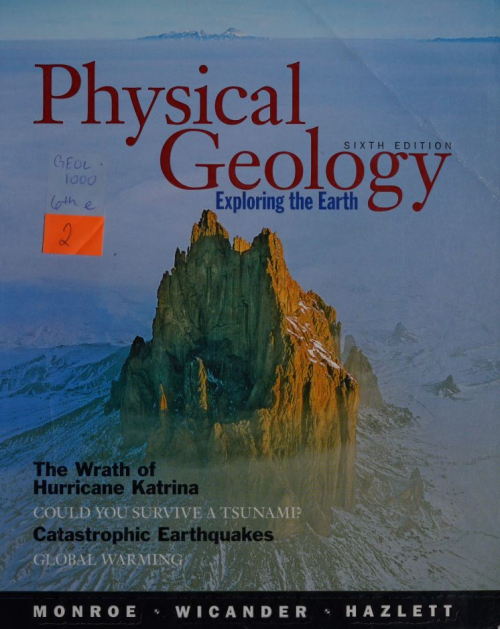
This sixth edition of Physical Geology is a straightforward, easy-to-read introduction to geology for both geology majors and nonmajors. The organization of the book is traditional and matches the organization of most lab manuals. Each chapter has been written to be as self-contained as possible so that the instructor can reorganize the chapter sequence if desired.
Major revisions have been made in the text of the introductory chapter and in the chapters on igneous rocks, plate tectonics, and mountains. Chapter 1 has been shortened. The plate-tectonic origin of volcanic and plutonic rocks has been clarified and combined in chapter 4.
Earth is a dynamic planet that has changed continuously during its 4.6 billion years of existence. The size, shape, and geographic distribution of the continents and ocean basins have changed through time, as have the atmosphere and biota. As scientists and concerned citizens, we have become increasingly aware of how fragile our planet is and, more importantly, how interdependent all of its various systems and subsystems are. We have also learned that we cannot continually pollute our environment and that our natural resources are limited and, in most cases, nonrenewable.
Пособие разработано в соответствии с программой дисциплины и ФГОС ВО Федеральным государственным образовательным стандартом высшего образования; представляет курс лекций, в котором рассмотрены основные положения геологии: общие сведения о строении Земли, геологических процессах формирования и истории развития нашей планеты; изложены особенности строения и состава земной коры, дана характеристика минералов и горных пород, слагающих земную кору. Рассмотрены эндогенные и экзогенные процессы формирования рельефа. Предназначено для студентов, обучающихся по направлению подготовки 21.03.01. Нефтегазовое дело.