Добрый день, Коллеги. Важное сообщение, просьба принять участие. Музей Ферсмана ищет помощь для реставрационных работ в помещении. Подробности по ссылке
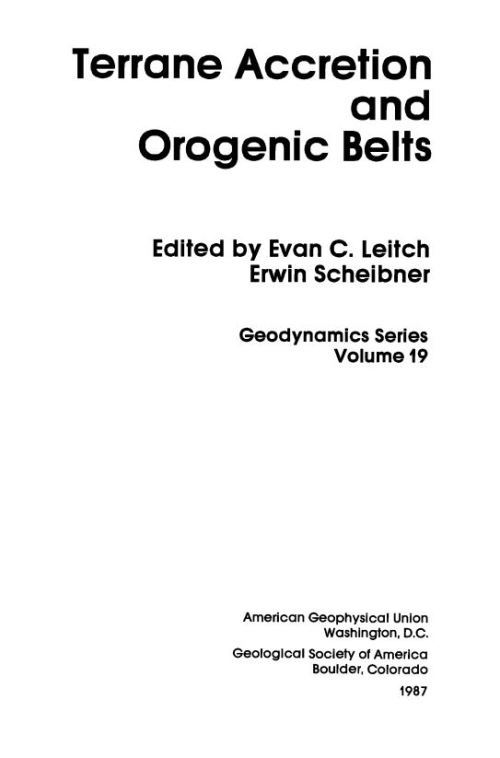
Preface E.C. Leitch and E. Scheibner Stratotectonic Terranes of the Eastern Australian Tasmanides E.C. Leitch and E. Scheibner A Critique of Paleomagnetic Results From Australian Paleozoic Fold Belts and Displaced Terranes P. W. Schmidt and B. J. J. Embleton Terranes of the Wonominta Block, Far Western New South Wales E. C. Leitch, B. D. Webby, K. J. Mills, and P. Kolbe 31 Early Palaeozoic Back-Arc Deformation in the Lachlan Fold Belt, Southeastern Australia: Implications for Terrane Translations in Eastern Gondwanaland Christopher L. Fergusson Terranes of the Tumut District, Southeastern New South Wales, Australia H. Basden, B. J. Franklin, B. Marshall, and A. E. Waltho The Eastern Lachlan Fold Belt of Southeast Australia: A Possible Late Ordovician to Early Devonian Sinistral Strike Slip Regime G. H. Packham
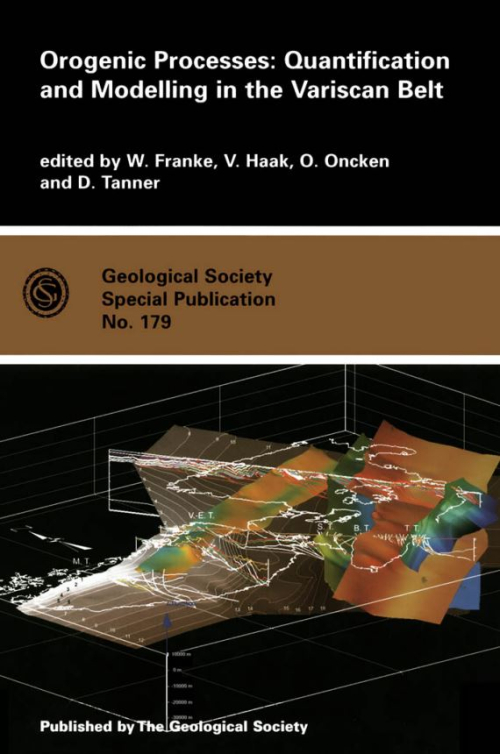
Franke, W., Haak, V., Oncken, O. & Tanner, D. Orogenic processes: quantification and modelling in the Variscan Belt McKerrow, W. S. & van Staal, C, R. The Palaeozoic time scale reviewed McKerrow, W. S., MacNiocaill, C., Ahlberg, P. E., Clayton, G., Cleal, C. J. & Eagar, R. M. C. The Late Palaeozoic relations between Gondwana and Laurussia Tait, J., Schatz, M., Bachtadse, V. & Soffel, H. Palaeomagnetism and Palaeozoic palaeogeography of Gondwana and European terranes Franke, W. The mid-European segment of the Variscides: tectonostratigraphic units, terrane boundaries and plate tectonic evolution Franke, W. & Zelazniewicz, A. The eastern termination of the Variscides: terrane correlation and kinematic evolution Belka, Z., Ahrendt, FI., Franke, W. & Wemmer, K. The Baltica-Gondwana suture in central Europe: evidence from K-Ar ages of detrital muscovites and biogeographical data Finger. F., Hanzl, P., Pin, C., von Quadt, A. & Steyrer. FI. P. The Brunovistulian: Avalonian Precambrian sequence at the eastern end of the Central European Variscides? Hegner, E. & Kroner. A. Review of Nd isotopic data and xenocrystic and detrital zircon ages from the pre-Variscan basement in the eastern Bohemian Massif: speculations on palinspastic reconstructions
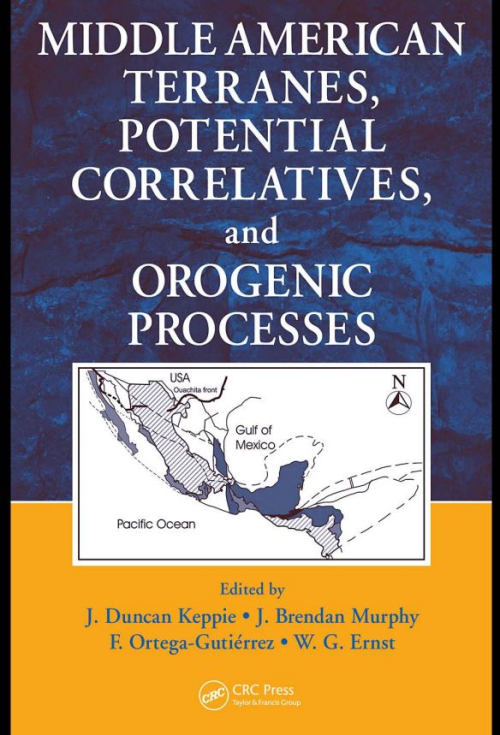
Editors’ Preface —J. Duncan Keppie, J. Brendan Murphy, F. Ortega-Gutierrez, and W. G. Ernst Middle American Terranes Terranes of Mexico Revisited: A 1.3 Billion Year Odyssey —J. Duncan Keppie Oaxaquia Terrane Sedimentary Origin of Calcareous Intrusions in the ~1 Ga Oaxacan Complex, Southern Mexico: Tectonic Implications —J. Dostal, J. D. Keppie, H. Macdonald, and F. Ortega-Gutierrez Geochronology and Geochemistry of the ~917 Ma, Calc-alkaline Etla Granitoid Pluton (Oaxaca, Southern Mexico): Evidence of Post-Grenvillian Subduction along the Northern Margin of Amazonia —C. Ortega-Obregon, J. D. Keppie, L. A. Solari, F. Ortega-Gutierrez, J. Dostal, R. Lopez, A. Ortega-Rivera, and J. W. K. Lee
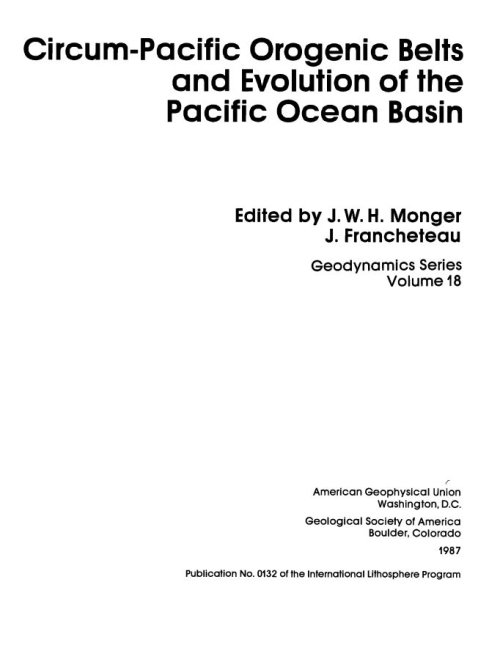
Foreword Raymond A. Price Preface J. W. H. Monger and Jean Francheteau Chilean vs. Mariana Type Subduction Zones With Remarks on Arc Volcanism and Collision Tectonics Seiya Uyeda Effects of Collisions at Trenches on Oceanic Ridges and Passive Margins Zvi Ben-Avraham and Amos Nur Reconstructions, Plate Interactions, and Trajectories of Oceanic and Continental Plates in the Pacific Basin David C. Engebretson, Allan Cox, and Michel Debiche Pacific and Kula/Eurasia Relative Motions During the Last 130 Ma and Their Bearing on Orogenesis in Northeast Asia L. P. Zonenshain, M. V. Kononov, and L. A. Savostin
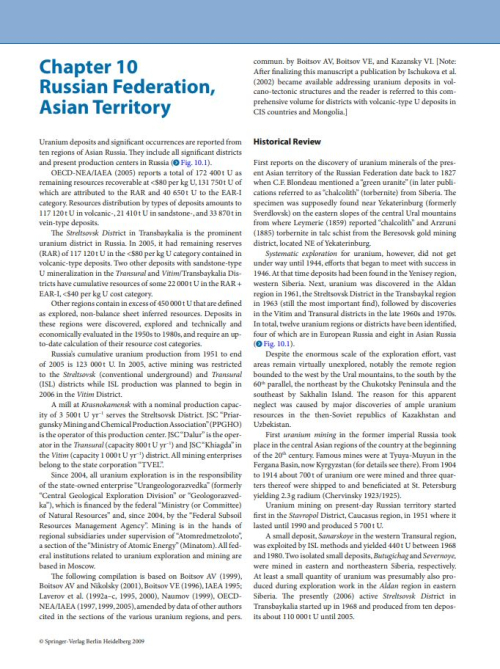
Uranium deposits and signifi cant occurrences are reported from ten regions of Asian Russia. Th ey include all signifi cant districts and present production centers in Russia (>Fig. 10.1).OECD-NEA/IAEA (2005) reports a total of 172 400 t U as remaining resources recoverable at <$80 per kg U, 131 750 t U of which are attributed to the RAR and 40 650 t U to the EAR-I category. Resources distribution by types of deposits amounts to 117 120 t U in volcanic-, 21 410 t U in sandstone-, and 33 870 t in vein-type deposits.
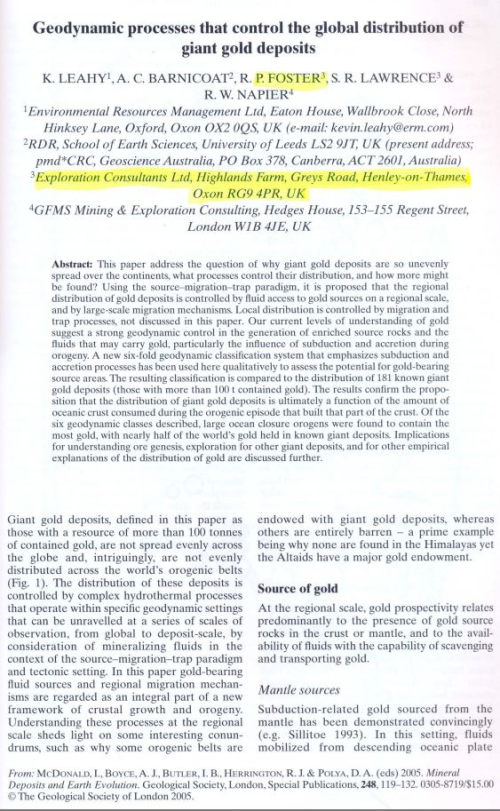
This paper address the question of why giant gold deposits are so unevenly spread over the continents, what processes control their distribution, and how more might be found? Using the source-migration-trap paradigm, it is proposed that the regional distribution of gold deposits is controlled by fluid access to gold sources on a regional scale, and by large-scale migration mechanisms.
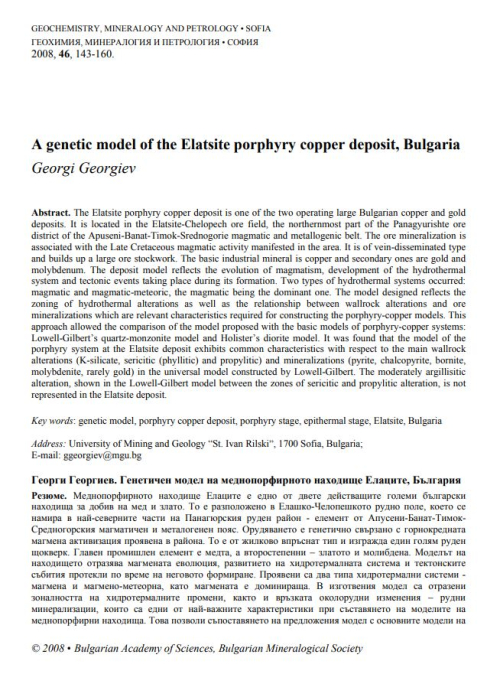
The Elatsite porphyry copper deposit is one of the two operating large Bulgarian copper and gold deposits. It is located in the Elatsite-Chelopech ore field, the northernmost part of the Panagyurishte ore district of the Apuseni-Banat-Timok-Srednogorie magmatic and metallogenic belt. The ore mineralization is associated with the Late Cretaceous magmatic activity manifested in the area. It is of vein-disseminated type and builds up a large ore stockwork.
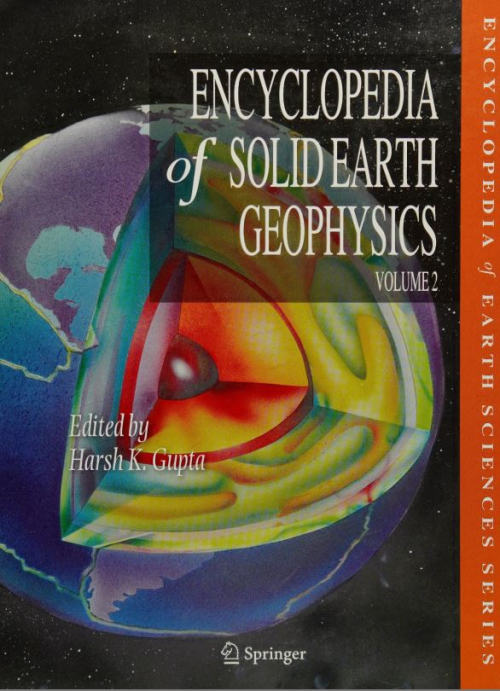
All information about the Earth’s interior comes from field observations and measurements made within the top few kilometers of the surface, from laboratory experiments and from the powers of human deduction, relying on complex numerical modeling. Solid Earth Geophysics encompasses all these endeavors and aspires to define and quantify the internal structure and processes of the Earth in terms of the principles of physics, corresponding mathematical formulations and computational procedures.
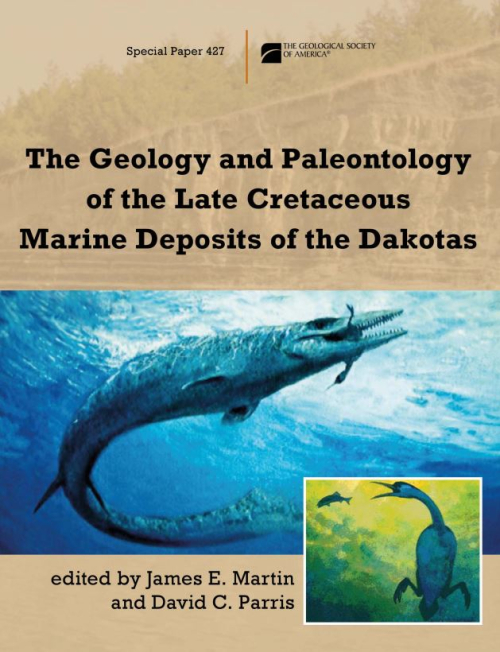
Introduction to the geology and paleontology of the Late Cretaceous marine deposits of the Dakotas D.C. Parris, S.Y. Shelton, and J.E. Martin Revised lithostratigraphy of the lower Pierre Shale Group (Campanian) of central South Dakota, including newly designated members J.E. Martin, J.L. Bertog, and D.C. Parris Geochemical and mineralogical recognition of the bentonites in the lower Pierre Shale Group and their use in regional stratigraphic correlation J. Bertog, W. Huff, and J.E. Martin Stratigraphy and paleoecology of the middle Pierre Shale along the Missouri River, central South Dakota P.A. Hanczaryk and W.B. Gallagher
The geologic history of the San Manuel-Kalamazoo deposit has provided an opportunity for the examination of vertical and horizontal zoning relationships in a porphyry copper system. Precambrian Oracle "granite," a Laramide monzonite porphyry, and a Laramide dacite porphyry are hosts to zones of potassic, phyllic, argillic, and propylitic assemblages shown to be coaxially arranged outward from a potassic core through phyllic, argillic, and propylitic zones. Alteration zones at depth comprise an outer chlorite-sericite-epidote-magnetite assemblage yielding to an inner zone of quartz-K4eldspar-sericite-chlorite. Mineralization zones are conformable to the alteration zones, the ore zone (with a 0.5% Cu cutoff) overlapping the potassic and phyllic zones.