Добрый день, Коллеги. Важное сообщение, просьба принять участие. Музей Ферсмана ищет помощь для реставрационных работ в помещении. Подробности по ссылке

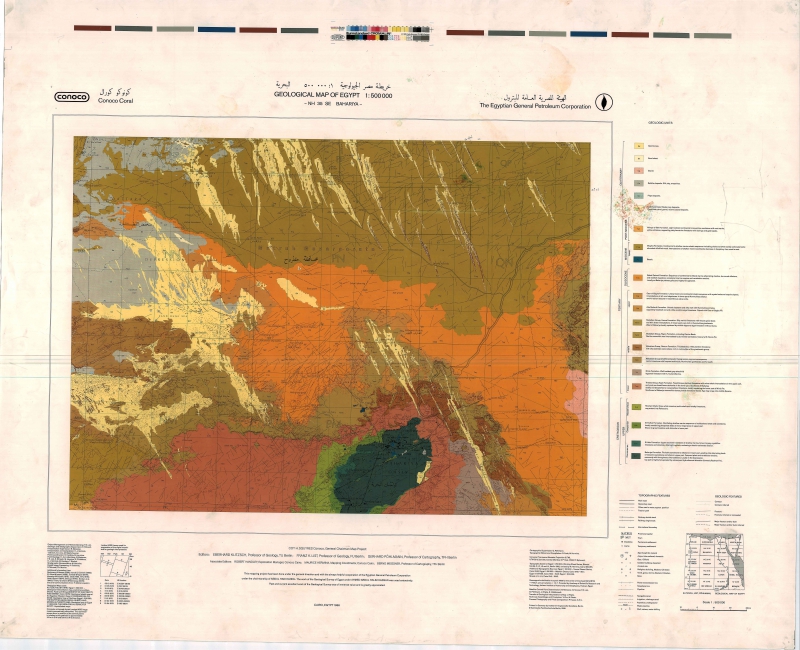
H-35-D (Bahariya). Geological map of Egypt
Карта составлена:The Egyptian general petroleum corporation, 1986 г.
Редактор(ы):Eberhard Klitzsch, Franz K.Liist, Gerhard Pohlmann
Номенклатурный номер:H-35-Г
Язык(и)Английский
Масштаб:1:500000
Листы на этой карте:H-35-D
Назначение карты:Геологическая карта
Скачать
Карта (8.57M)
На странице представлен материал:Геологическая карта: H-35-D (Bahariya). Geological map of Egypt, масштаб: 1:500000 , составлена: The Egyptian general petroleum corporation, 1986 г., редактор(ы): Eberhard Klitzsch, Franz K.Liist, Gerhard Pohlmann
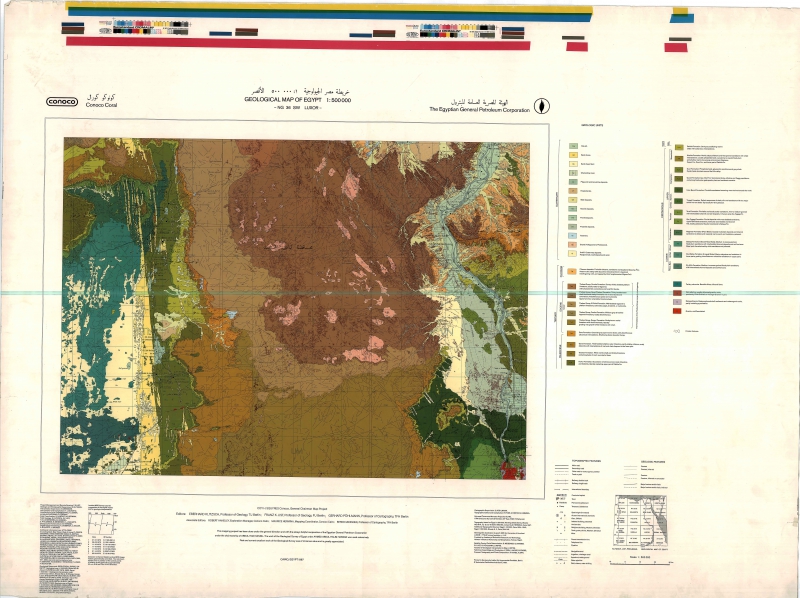
G-36-C (Luxor). Geological map of Egypt
Карта составлена:The Egyptian general petroleum corporation, 1987 г.
Редактор(ы):Eberhard Klitzsch, Franz K.Liist, Gerhard Pohlmann
Номенклатурный номер:G-36-В
Язык(и)Английский
Масштаб:1:500000
Листы на этой карте:G-36-C
Назначение карты:Геологическая карта
Скачать
Карта (10.57M)
На странице представлен материал:Геологическая карта: G-36-C (Luxor). Geological map of Egypt, масштаб: 1:500000 , составлена: The Egyptian general petroleum corporation, 1987 г., редактор(ы): Eberhard Klitzsch, Franz K.Liist, Gerhard Pohlmann
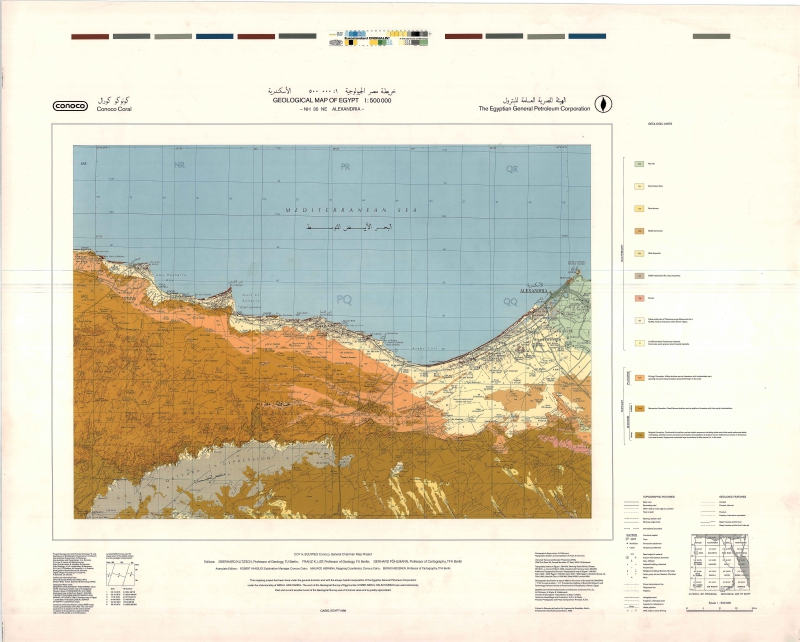
H-35-B (Alexandria). Geological map of Egypt
Карта составлена:The Egyptian general petroleum corporation, 1986 г.
Редактор(ы):Eberhard Klitzsch, Franz K.Liist, Gerhard Pohlmann
Номенклатурный номер:H-35-Б
Язык(и)Английский
Масштаб:1:500000
Листы на этой карте:H-35-B
Назначение карты:Геологическая карта
Скачать
Карта (7.1M)
На странице представлен материал:Геологическая карта: H-35-B (Alexandria). Geological map of Egypt, масштаб: 1:500000 , составлена: The Egyptian general petroleum corporation, 1986 г., редактор(ы): Eberhard Klitzsch, Franz K.Liist, Gerhard Pohlmann
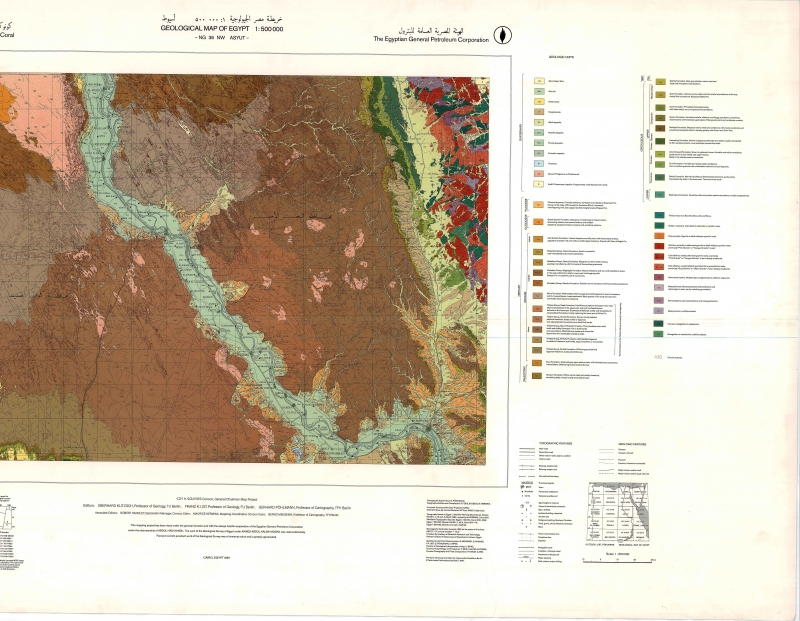
G-36-A (Asyut). Geological map of Egypt
Карта составлена:The Egyptian general petroleum corporation, 1987 г.
Редактор(ы):Eberhard Klitzsch, Franz K.Liist, Gerhard Pohlmann
Номенклатурный номер:G-36-А
Язык(и)Английский
Масштаб:1:500000
Листы на этой карте:G-36-A
Назначение карты:Геологическая карта
Скачать
Карта (9.14M)
На странице представлен материал:Геологическая карта: G-36-A (Asyut). Geological map of Egypt, масштаб: 1:500000 , составлена: The Egyptian general petroleum corporation, 1987 г., редактор(ы): Eberhard Klitzsch, Franz K.Liist, Gerhard Pohlmann
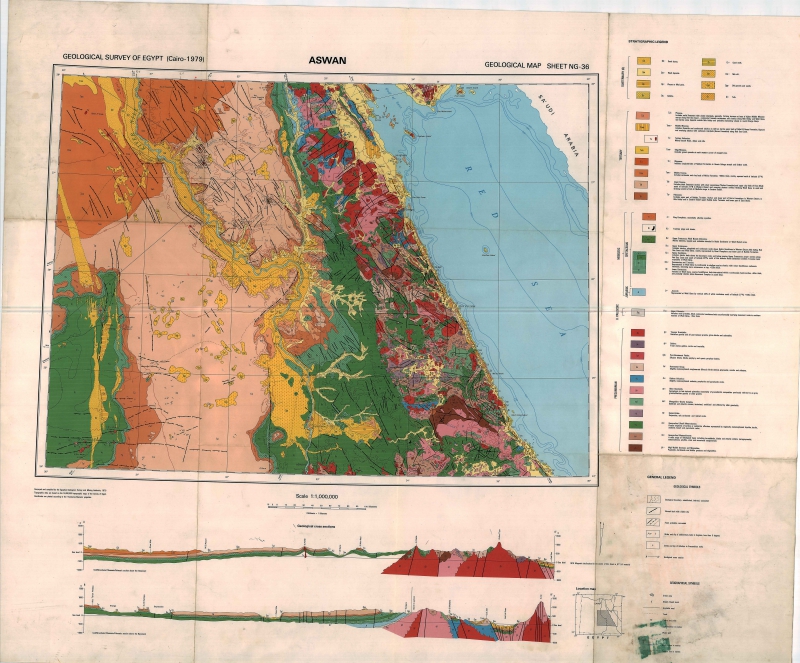
G-36. Aswan
Карта составлена:Egyptian geological survey and mining authority, 1979 г.
Номенклатурный номер:G-36
Язык(и)Английский
Масштаб:1:1000000
Листы на этой карте:G-36
Назначение карты:Геологическая карта
Скачать
Карта (8.82M)
На странице представлен материал:Геологическая карта: G-36. Aswan, масштаб: 1:1000000 , составлена: Egyptian geological survey and mining authority, 1979 г.
Выпуск 123
Автор(ы):Герасимов А.П.
Издание:Государственное издательство геологической литературы, Москва-Ленинград, 1940 г., 84 стр.
Язык(и)Английский, Русский
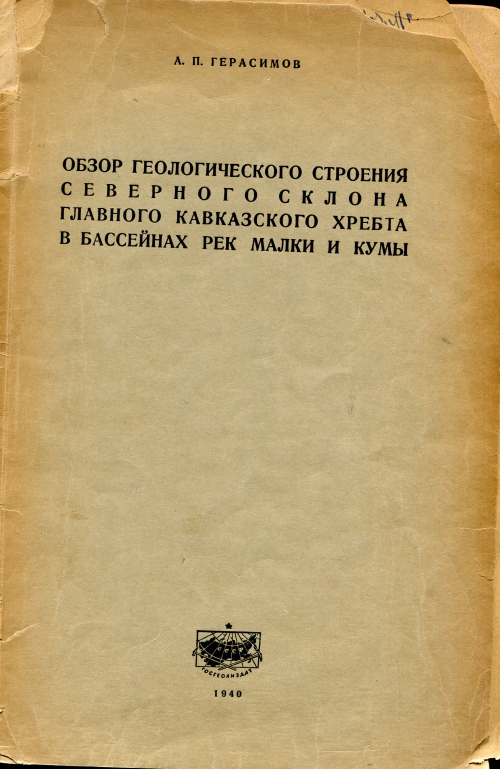
Обзор геологического строения северного склона главного Кавказского хребта в бассейнах рек Малки и Кумы

В настоящей работе я публикую геологическую карту и пытаюсь дать сравнительно краткую геологическую характеристику обширной области, тяготеющей к группам Кавказских минеральных вод и обнимающей площадь в 5460 км2. Далеко не вся площадь прилагаемой карты снята мною лично: большое пространство около Кисловодска и Ессентуков картировано во время разведочкых работ, узкая  полоса   между   станицами Александрийской и Зольской снята B.Н.Лодочниковым, крайний восток  и   крайний  север   площади  изучены C.А.Гатуевым, детализация разрезов нижнего мела в окрестностях Кисловодска и точная съемка соответственной площади выполнены Т.А.Мордвилко. Участие каждог из этих лиц показано на особой маленькой карточке. Некоторая часть площади карты вообще не подвергалась детальной геологической съемке, а разновременно посещалась по отдельным маршрутам многими лицами, в том числе и мною, и карта для таких мест построена на полученных при этих поездках материалах. Основная работа в области самих групп была выполнена по полуверстным планшетам (1 : 21 000) съемки Кавказского военно-топографического отдела, а соседние местности картировались на верстовых планшетах (1 : 42 000) съемки того же отдела, выполненной им по специальному поручению б. Геологического комитета именно в связи с геологическим изучением Кавказских минеральных вод.

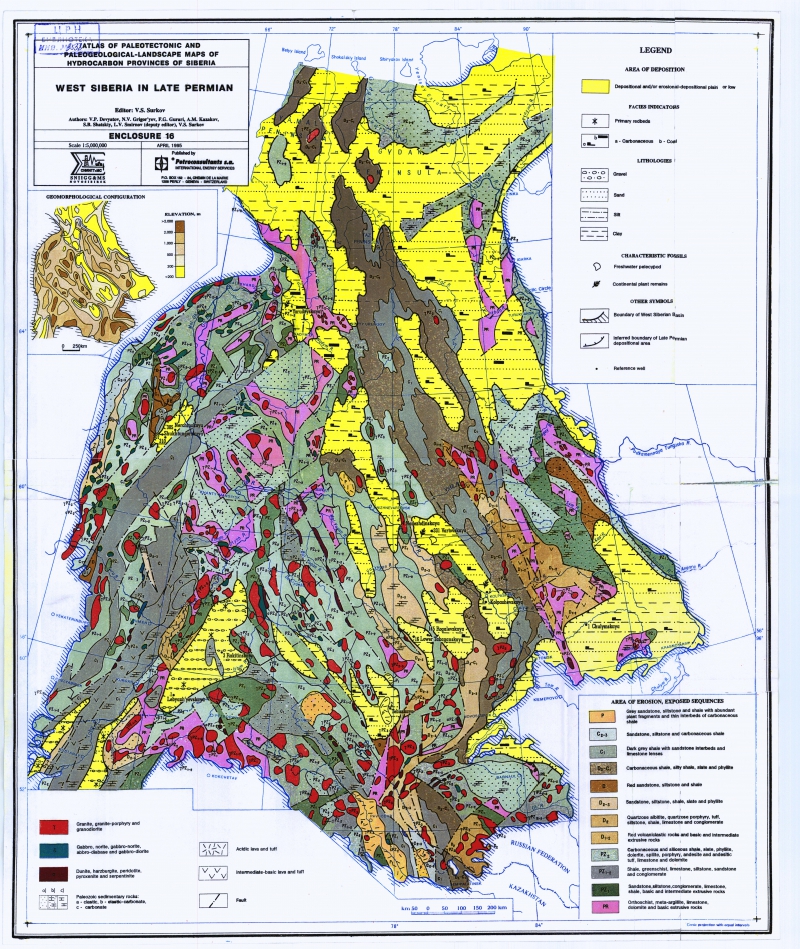
Atlas of paleotectonic and paleogeological-landscape maps of hydrocarbon provinces of siberia / Атлас палеотектонических и палеогеологических карт Западно-Сибирской нефтегазоносной провинции (Лист 1 - поздняя Пермь)
Карта составлена:СНИИГГиМС, 1995 г.
Редактор(ы):Сурков В.С.
Язык(и)Английский
Масштаб:1:5000000
Назначение карты:Палеогеологическая карта
Скачать
Карта (7.62M)
На странице представлен материал:Палеогеологическая карта: Atlas of paleotectonic and paleogeological-landscape maps of hydrocarbon provinces of siberia / Атлас палеотектонических и палеогеологических карт Западно-Сибирской нефтегазоносной провинции (Лист 1 - поздняя Пермь), масштаб: 1:5000000 , составлена: СНИИГГиМС, 1995 г., редактор(ы): Сурков В.С.
Выпуск 98
Издание:Economic geology, 2003 г., 12 стр.
Язык(и)Английский
Source of iron for sulfidation and gold deposition, Twin Creeks carlin-type deposit, Nevada

This study was undertaken to determine the source of iron in Comus Formation sedimentary rocks that were sulfidized during deposition of gold in the Megapit area of the Twin Creeks Carlin-type deposit. Sedimentary rocks in and near the Megapit contain ferroan dolomite, largely as overgrowths on iron-poor dolomite. Iron to form these overgrowths appears to have been released from mafic volcanic rocks that are interlayered with the sedimentary rocks. These igneous rocks have undergone two stages of hydrothermal alteration. The first stage involved formation of albite and iron-rich chlorite, possibly caused by interaction with seawater. The second stage involved destruction of the iron-rich chlorite by illite or sericite, which released iron to form ferroan dolomite in the sedimentary rocks. Comparisons show that transfer of iron from the igneous rocks to the sedimentary rocks can account for the present distributions of iron in these rocks. Relative to basalts, Comus Formation igneous rocks are enriched in iron and potassium. These results suggest that ferroan dolomite in sedimentary rocks is not solely a product of diagenetic processes and can form when iron is released from adjacent iron-bearing igneous rocks. Recognition of this additional mechanism for formation of ferroan dolomite expands the range of geologic settings that can be favorable for formation of gold deposits formed by sulfidation.

Выпуск 97
Издание:Economic geology, 2002 г., 6 стр.
Язык(и)Английский
An evaluation of fluid inclusion microthermometric data for orpiment-realgar-calcite-barite-gold mineralization at the betze and carlin mines, Nevada

Carlin-type deposits contain gold in association with main-stage quartz-pyrite-kaolinite mineralization and late-stage orpiment-realgar-calcite-barite mineralization. Fluid characteristics for main-stage mineralization are well documented by fluid inclusion and stable isotope studies on quartz. In contrast, fluid characteristics for late-stage mineralization are not well constrained because of large ranges in fluid inclusion microthermo-metric data. These ranges could represent real variations in fluids or be a result of the reequilibration of fluid inclusions.

Microthermometric analyses were conducted on fluid inclusions in samples of barite, calcite, realgar, and or-piment from the Betze and Carlin mines, Nevada. Petrographic studies of individual crystals and cleaved sections reveal that fluid inclusions in realgar and barite have negative crystal shapes, in contrast to elongate and rounded inclusions in orpiment and calcite. Point-count data document that one-phase liquid inclusions (type 1) are the dominant type in barite and realgar, relative to two-phase, vapor-poor inclusions (type 2) in calcite and orpiment. Type 2 inclusions in realgar and barite commonly reequilibrate (e.g., stretch) during analysis and exhibit ranges in homogenization temperatures (Th) of 100º to 250ºC and 110º to 300ºC, respectively. In contrast, type 2 inclusions in orpiment and calcite have Th of 108º to 182ºC, which could be repeated to within 1ºC. Based on these results, fluid inclusions in barite and realgar are most susceptible to reequilibration, with Th of ~100º to 110ºC most representative. Fluid salinities for orpiment and calcite are 1.7 to 5.4 wt percent NaCl equiv, relative to 1.1 to 2.9 wt percent NaCl equiv for barite and realgar. The lower Th and salinity for fluid inclusions in barite and realgar suggest fluid cooling and dilution, following the deposition of paragenetically earlier orpiment and calcite.

Выпуск 96
Автор(ы):Cline J.S., Tracy L.C.
Издание:Economic geology, 2001 г., 18 стр.
Язык(и)Английский
Alteration associated with gold deposition at the getchell carlin-type gold deposit, North-Central Nevada

Wall-rock alteration at the Getchell underground deposit was examined to determine the effects of Au-bear-ing fluids on host lithologies and the relationship between K-bearing alteration minerals and Au deposition. The major, minor, and trace element geochemistry of highly altered and mineralized to unmineralized rocks from the Getchell deposit was quantified for more than 50 samples collected along 13 transects through calcareous siltstone and carbonaceous limestone and along one transect through a rhyodacite dike. Each transect in sedimentary rocks was collected along a single homogeneous bed that could be followed from high-grade ore to moderately altered rock or waste rock. Analyses were obtained for 39 elements, 10 oxides, and loss on ignition, using multiple techniques. Petrographic studies were integrated with geochemistry and X-ray diffraction and electron microbeam analyses to identify ore and alteration minerals and to correlate mineralogy with geochemical fluxes.

Ленты новостей
569.7