Добрый день, Коллеги. Важное сообщение, просьба принять участие. Музей Ферсмана ищет помощь для реставрационных работ в помещении. Подробности по ссылке
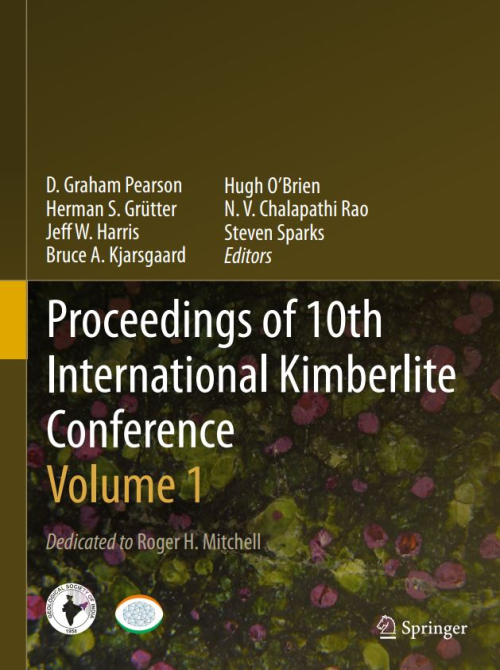
Paragenesis and Oxygen Isotopic Studies of Serpentine in Kimberlite Roger H. Mitchell Wyoming Craton Mantle Lithosphere: Reconstructions Based on Xenocrysts from Sloan and Kelsey Lake Kimberlites I. V. Ashchepkov, H. Downes, R. Mitchell, N. V. Vladykin, H. Coopersmith and S. V. Palessky Contrasting Garnet Lherzolite Xenolith Suites from the Letšeng Kimberlite Pipes: Inferences for the Northern Lesotho Geotherm N. P. Lock and J. B. Dawson Tectonic Relationships Between E-Type Cratonic and Ultra-High-Pressure (UHP) Diamond: Implications for Craton Formation and Stabilization H. H. Helmstaedt Deep-Seated Xenoliths from the Brown Breccia of the Udachnaya Pipe, Siberia I. V. Ashchepkov, T. Ntaflos, S. S. Kuligin, E. V. Malygina, A. M. Agashev, A. M. Logvinova, S. I. Mityukhin, N. V. Alymova, N. V. Vladykin, S. V. Palessky and O. S. Khmelnikova
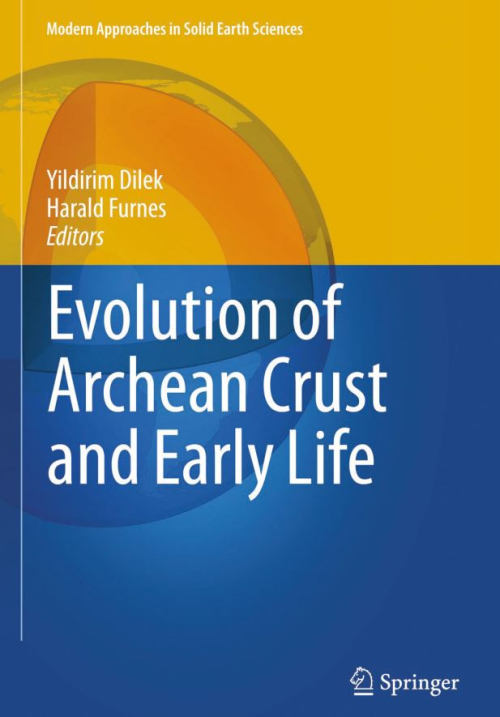
The geological, geochemical and geodynamic processes involved in the formation of oceanic and continental crust during the Phanerozoic are well understood within the frameworks of plate and plume tectonics. However, processes and the mode (steady-state versus episodic) of oceanic and juvenile continental crust generation in the
Bereits drei Jahre nach ihrem Erscheinen war die 6. Auflage des „Matthes“ vergriffen und der Verlag drängte auf die Vorbereitung einer Neuauflage. Das bot die Gelegenheit, den Inhalt des Lehrbuchs gründlich zu überarbeiten und an den modernen Wissensstand anzupassen. Die bewährte Gliederung in die Hauptteile „Spezielle Mineralogie“, „Petrologie und Lagerstättenkunde“ sowie „Stoffbestand und Bau von Erde und Mond“ blieb dabei erhalten. Allerdings schien es angezeigt, einige sehr umfangreiche Kapitel aufzuteilen, so dass das Buch jetzt aus 30 Kapiteln besteht. Die „Mineralogie“ wurde an vielen Stellen inhaltlich erweitert; zahlreiche neue Abbildungen kamen hinzu; dem stehen Streichungen veralteter Passagen und Straffungen des Textes gegenüber. <...>
Advances in nanotechnology over the past decade have made scanning electron microscopy (SEM) an indispensable and powerful tool for analyzing and constructing new nanomaterials. Development of nanomaterials requires advanced techniques and skills to attain higher quality images, understand nanostructures, and improve synthesis strategies.
Горная геология является специализированной областью прикладных геологических наук, которая исторически развивалась как поддержка эксплуатации рудников и оценки горных проектов. Основной задачей горной геологии является предоставление подробной геологической информации, а также проведение техникоэкономических исследований для оценки проекта горных работ. Когда начинается добыча, горные геологи обеспечивают геологическое сопровождение работы, обеспечивая экономически эффективную добычу ценных минералов и их точное отделение от пустых пород.
The book: Geology and Mineral Resources, by Dr. R. K. Upadhyay starts with a brief introduction about the universe, its galaxies, solar systems, various planets including our own “mother earth”. Mineral resources and the various geological dynamic processes of the Earth have left their imprints on human kind and helped shape their history.
The origin of granite has for long fascinated geologists though serious debate on the topic may be said to date from a famous meeting of the Geological Society of France in 1847. My own introduction to the subject began exactly one hundred years later when, in an interview with Professor H.H. Read, I entered his study as an amateur fossil collector and left it as a committed granite petrologist - after just ten minutes!
In 1916, the first generation of geological graduates entered the China Geological Survey and opened a new era of geological survey in China. Over the past 100 years, generations of geologists have made outstanding contributions to the geological survey and prospecting for China’s prosperity. They measure the ground, search for treasures, explore the earth, and engrave the beautiful mountains and rivers.
The Asian continent is the main part of the greatest continental plate—Eurasian plate, on the Earth. The Asian continent covers the tremendous area and has a very long geological history, complex intraplate deformations, a lot of mineral resources and the changeable ecologic environment. Researching the Asian tectonics, which plays a dominant role in the resources and environments, is an interesting subject. With the rapid development of society and economy, it is becoming more and more important, interesting and urgent to re-recognize and understand the relationship between the Asia tectonic evolution and giant ore deposit (including giant or supergiant ore fields and provinces) from the perspective of lithospheric plate tectonics.
As explained in Preface, this book is a selfcontained member of a broader knowledge system on the world's mineral deposits and their settings I have been developing and experimenting with for more than 40 years. It is a product of global firsthand information gathering in the field and "data mining" from the literature, followed by sorting and organization into interrelated sets searchable and accessible by the rapidly evolving techniques of modern information technology.