Добрый день, Коллеги. Важное сообщение, просьба принять участие. Музей Ферсмана ищет помощь для реставрационных работ в помещении. Подробности по ссылке
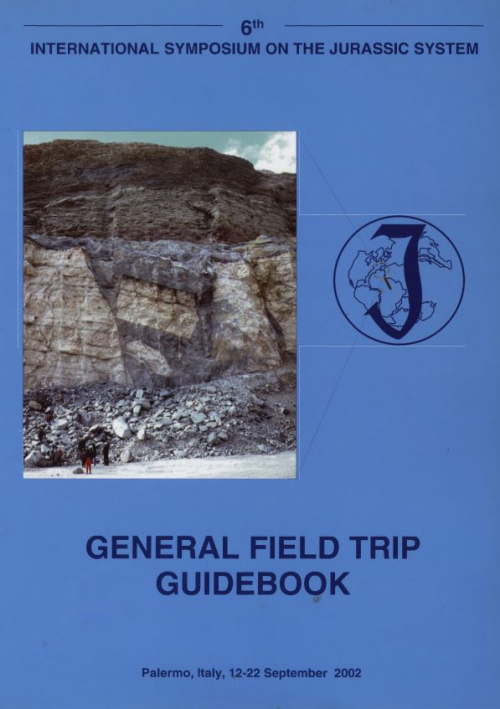
This brief paper wants to introduce the fundamentals o f the structure and stratigraphy of Sicily, mostly based on most recent studies, with the aim of better understanding the palaeogeographic and geodinamic setting in which the Jurassic sediments developed.
Sicily is part of the western central Mediterranean region and lies along the African-European plate boundary. It is a segment linking the African Maghrebides with southern Apennines, via the Calabrian accretionary wedge (Fig. 1). The chain and its submerged western and northern extensions are partly located between the Sardinia block and the Pelagian-Ionian sector, and partly beneath the central southern Tyrrhenian sea (Fig. 2). <...>
Crystal growth of diamonds at the Earth’s mantle depths of 150–800 km had been accompanied by a fragmentary capturing minerals, melts and volatile compounds (as diamond-hosted inclusions) from the parental melts. This indicates convincingly that diamonds were originated jointly with the phases of primary hermetic inclusions in a common parental medium. This opens up possibilities for evaluating the general chemistry of natural diamond-producing systems from the compositions of significantly different phases associated with diamonds in primary inclusions. Of particular value is that it has been made possible to determine the boundary compositions for the experimental systems which duplicate the natural ones responsible for genesis of diamonds and associated phases. As a consequence, the principal problems of diamond genetic mineralogy may be formulated. It became apparent, that the methodology of physico-chemical experiments is of crucial importance in solution of the genetic problems for diamonds and associated phases. <...>
The Precambrian is of very special significance in the evols ution of the Earth’s crust. It represents almo st seven-eighth of the geological history of our planet. During this period of time, lasting approximately 4,000 million years, the basement of continental land masses and the deposits of iron and manganese ore were formed. These latter are of world-wide significance both in quantity and extent. They form part of the natural resources of the geographical environment and their study is important both for developed and developing countries <...>
Eie systematische Erforschung, der man die rumanischen Karstbauxite unterzogen hat, fuhrte zu einer Anzahl von Schlussfolgerungen, die bei der Aufstellung einer Einteilung dieser Gesteine, auf Grand der Vorkommenbedin-gungen und der chemisch-mineralogischen Zusammensetzung, behilflich waren.
Electrical Resistivity (ER) is a non-destructive geophysical method for geotechnical and geoenvironmental investigation. This technique is promising in producing soil moisture map and obtaining subsoil profile information. Additionally, the saturated and unsaturated soil parameters can be evaluated through the electrical resistivity method. The saturated and unsaturated soil properties are critical parameters for earthen infrastructure design, especially the landfill bottom liners and top covers, whereas the soil hydraulic properties play a significant role in the overall performance.
Gale is pleased to present the third edition of Geo-Data: The World Geographical Encyclopedia. This is the first new edition of Geo-Data since 1989, and it represents a complete revision and updating of that work. The purpose of the book remains unchanged: to provide the reader with the most detailed and comprehensive descriptions available for the physical geography of countries. Geo-Data’s focus and design is unique.
Exploration for Platinum: A Contemporary Viewpoint C.J. MORRISSEY (Riofinex North Ltd, Bristol, UK) The Platinum Market: Recent History and Future Developments C. R. N. CLARK (Johnson Matthey pIc, London, UK)
Evaluation of the Nickel Sulphide Bead Method of Fire-assay for the Platinum-Group Elements using Neutron Activation Analysis S.J. Parry, I. W. Sinclair & M. Asif {Imperial College Reactor Centre, Ascot, UK) Preconcentration of Precious Metals by Tellurium Sulphide Fire-assay Followed by Instrumental Neutron Activation Analysis I. Shazali, L. Van’t dack & R. Gijbels {University of Antwerp, Belgium) The Potential of Fire-assay and ICP-MS for the Determination of Platinum-Group Elements in Geological Materials {Abstract) The late A. R. Date, A. E. Davies & Y. Y. Cheung {British Geological Survey, London, UK) ICP-AES Determination of Precious Metals in Difficult Materials P. Whitehead {Johnson Matthey Technology Centre, Reading, UK) <...>