Добрый день, Коллеги. Важное сообщение, просьба принять участие. Музей Ферсмана ищет помощь для реставрационных работ в помещении. Подробности по ссылке
It is with great pleasure that I endorse Crimes Against Mine Planning by Mark Bowater. This book seeks to “call out” examples and themes of poor mine planning and mine management practices that have plagued many of us during our careers in mining. The mining industry plays a very important role in the Australian economy, with billions of dollars of capital deployed, earning even more billions of dollars of tax and royalty generating revenue. Efficient allocation and use of capital and labour is at the heart of a successful mining operation and good quality mine planning is the key to unlocking the inherent value of an orebody by efficiently planning and scheduling the use of that capital and labour.
This conference was designed to be a forum for open discussion of current knowledge, advances that are in progress, and direction for additional and future research into these systems. Further, the interlacing of professional disciplines was meant to provide dynamic interactions to foster information exchange among these groups. These professional disciplines included geologists, petrophysicists, geochemists, geophysicists, and engineers as well as individuals involved in the business of drilling and producing wells <...>
As an historian, my contribution in this Element will be centered on the historiography of paleontology, or the different ways in which paleontologists and historians have been engaging with paleontology’s past. The main thesis is as follows: How the history of paleontology is being told and shared has a role to play in making paleontology more accessible1 and equitable. How any community, including the paleontological community, relates to its past and summons it in the present helps define some of its future. This Element introduces a new and growing historiography of paleontology as a valuable resource forany one (students, educators, researchers, curators, volunteers, community leaders, etc.) seeking to make the study of the Earth’s deep past benefits to and from a diversity of people worthy of the diversity of life it brights to light. <...>
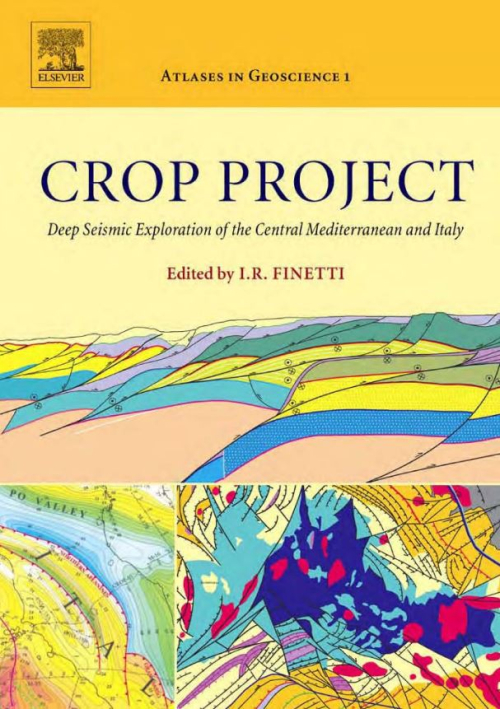
The Mediterranean Sea has been attracting the attention of numerous geoscientists from various countries and institutions for many years. A complex succession of geodynamic processes interplayed between Africa, Eurasia and the interposed ocean basins has characterized the geological history of the Mediterranean and surrounding regions, with ocean basin openings, plate and crustal block detachments, subductions, collisions, crustal extensions and contractions, arc and back-arc basin formation. In summary, in the Mediterranean area, on a regional scale, the imprint of all those significant plate-tectonics-related events observed on the larger global scale can be recognized. <...>
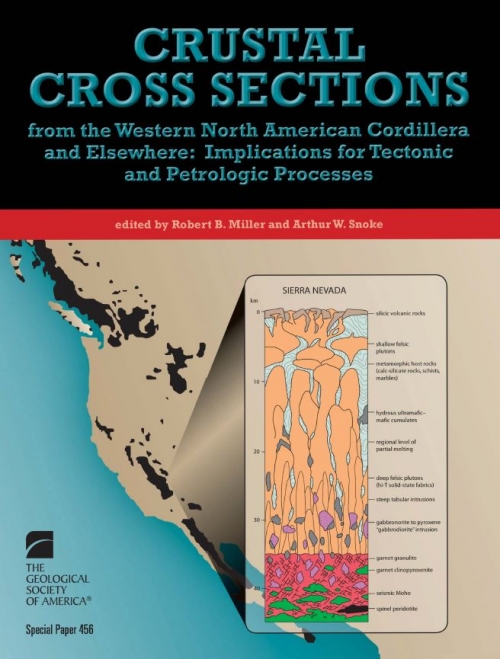
The nature of petrologic and structural properties and processes that characterize the middle and lower continental crust is a long-standing problem in the earth sciences. During the past several decades signifi cant progress has been made on this fundamental problem by synthesizing deep-crustal seismic-refl ection imaging, laboratory-based seismic-velocity determinations, xenolith studies, and detailed geologic studies of exposed crustal cross sections. Geological, geochemical, and geophysical studies of crustal sections provide a crustal-scale context for a variety of important problems in the earth sciences. Crustal sections are widely used to evaluate crustal composition and petrogenesis, including lateral and vertical variations in rock types. Evidence from deep levels of crustal sections suggests seismic shear-wave anisotropy and seismic lamination result from widespread subhorizontal contacts, shear zones, and transposition fabrics, and in some sections from metamorphosed m- to km-thick, intraplated and/or underplated mafi c magmatic sheets and plutons. Crustal sections also facilitate the evaluation of crustal rheology in natural settings from regional to outcrop scale. Magmatism, metamorphism, partial melting, and relatively small lithological differences control rheology, localize strain, and lead to markedly heterogeneous deformation over a wide range of crustal levels. Finally, crustal sections provide unique views of the architecture and deformation patterns of fault zones in the deep crust. <...>
Heat flow data have been used extensively by geoscientists to provide an indication of temperature variations within the Earth. However, there are relatively few experts available with the necessary experience to provide a critique of the central constraints or to obtain new data for second-order models. Terminology relating to thermal conductivity, diffusivity, vitrinite reflectance, xenolith geochemistry, and so on, is widely recognised but poorly understood, particularly by industry professionals.
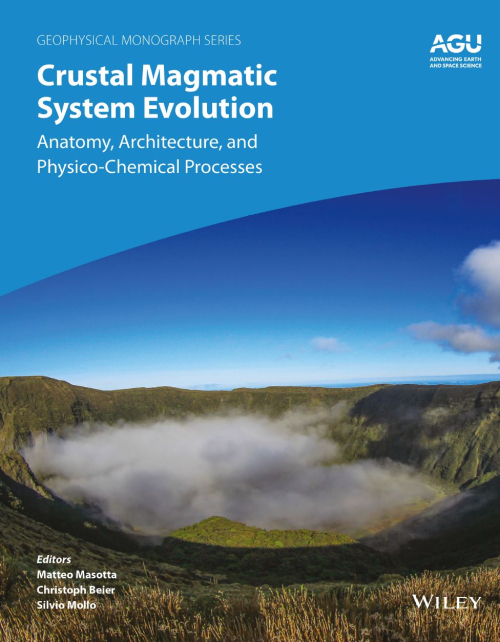
Magmatism in the continental and oceanic lithosphere contributes to the rejuvenation of Earth’s crust and is fundamental for the evolution of life on our planet. After their formation, magmas crystallize, differentiate, degas, mix with other magmas, and interact with the surrounding lithologies over a wide range of pressures and temperatures. The petrological and geochemical signatures of volcanic and plutonic rocks reflect the diversity of the petrogenetic processes. Deciphering these signatures has fundamental implications for elucidating the eruptive behavior of volcanoes and quantifying the mass fluxes related to the generation and growth of the crust.
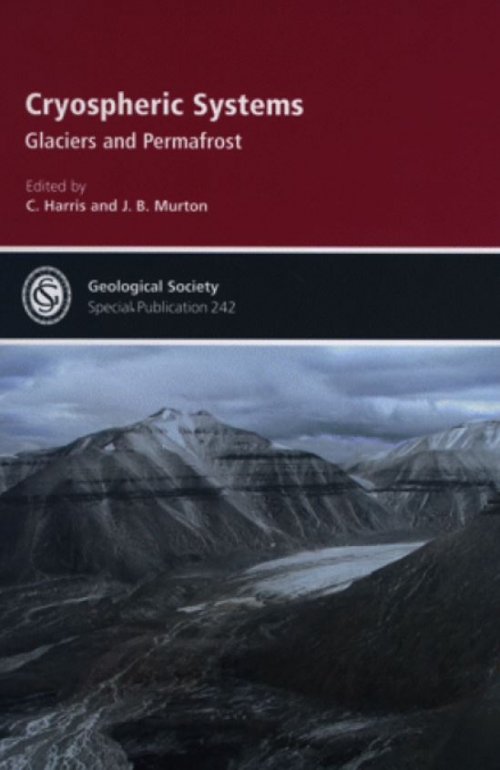
A consideration of the interactions between glaciers and permafrost is essential to many environmental studies of cold regions. This paper reviews how concepts, field data and experimental studies from glaciology and geocryology can provide a basis for improved understanding of some of the key glacier-permafrost interactions at scales ranging from continental ice sheets to small proglacial streams. Glacitectonic processes are strongly influenced by water pressures beneath subglacial and proglacial permafrost, and by the amount of unfrozen water within the permafrost.
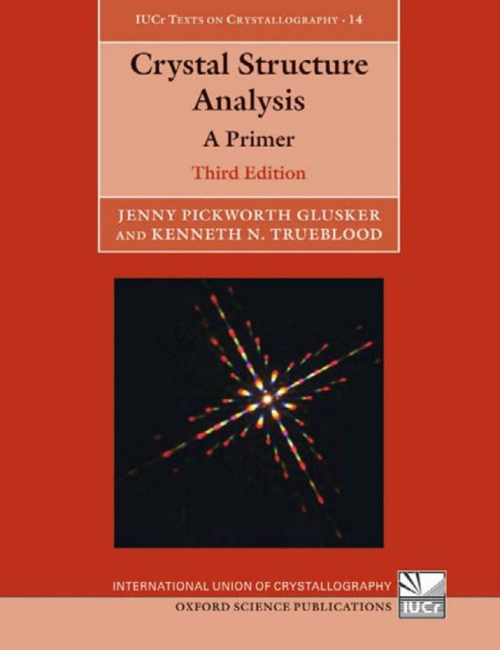
Much of our present knowledge of the architecture of molecules has been obtained from studies of the diffraction of X rays or neutrons by crystals. X rays* are scattered by the electrons of atoms and ions, and the interference between the X rays scattered by the different atoms or ions in a crystal can result in a diffraction pattern. Similarly, neutrons are scattered by the nuclei of atoms. Measurements on a crystal diffraction pattern can lead to information on the arrangement of atoms or ions within the crystal. This is the experimental technique to be described in this book