Добрый день, Коллеги. Важное сообщение, просьба принять участие. Музей Ферсмана ищет помощь для реставрационных работ в помещении. Подробности по ссылке
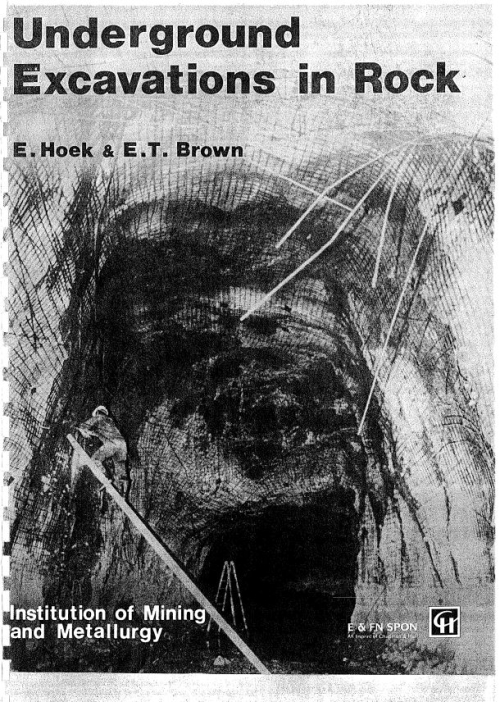
For many cencuries miners have been excavating below the ground surface in their ceaseless search for minerals. Originally, these underground operations were simply a downward extension of the small excavations created to exploit surface outcrops. As mineral exploration methods became more sophisticated, resulting in the discovery of large ore bodies at considerable depth below surface, underground mining methods were developed to exploit these deposits.
Physicists attempt to reduce natural phenomena to their essential dimensions by means of simplification and approximation and to account for them by defining natural laws. Paradoxically, whilst there is a critical need in geology to reduce the overwhelming field information to its essentials, it often re- mains in an over-descriptive state. This prudent attitude of geologists is dictated by the nature of the subjects being considered, as it is often difficult to derive the significant parameters from the raw data.
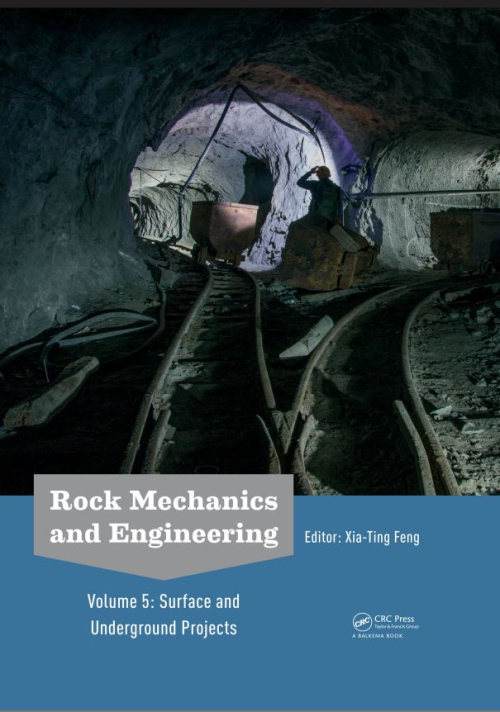
1 Discontinuity controlled slope failure zoning for a granitoid complex: A fuzzy approach Z. GUROCAK, S. ALEMDAG, H.T. BOSTANCI & C. GOKCEOGLU 2 Risk management of rock slopes in a dense urban setting K.K.S. HO, D.O.K. LO & R.W.H. LEE Tunnels and Caverns 3 Tunnels in the Himalaya R. K. GOEL & B. SINGH 4 Tunnels and tunneling in Turkey N. BILGIN & C. BALCI 5 Tunnels in Korea S. JEON, Y.H. SUH, S.P. LEE, S.B. LEE & K. SUH
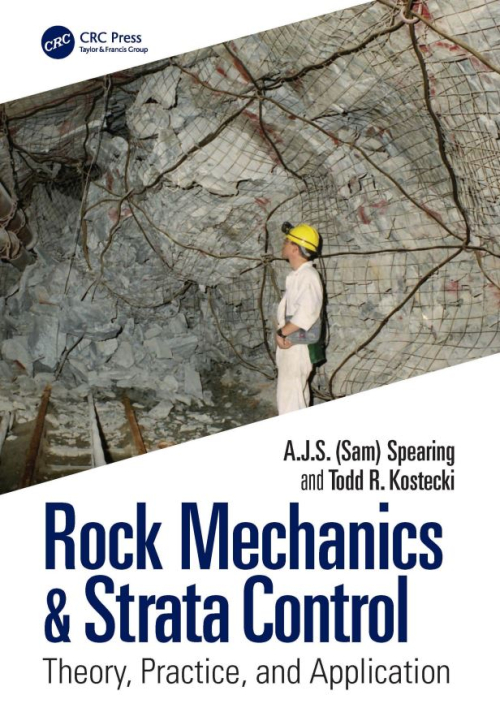
Rock Mechanics & Strata Control: Theory, Practice, and Application serves as a handbook that examines many of the fundamental and practical aspects of rock mechanics and strata control needed to help ensure safe and effective surface and underground mining.
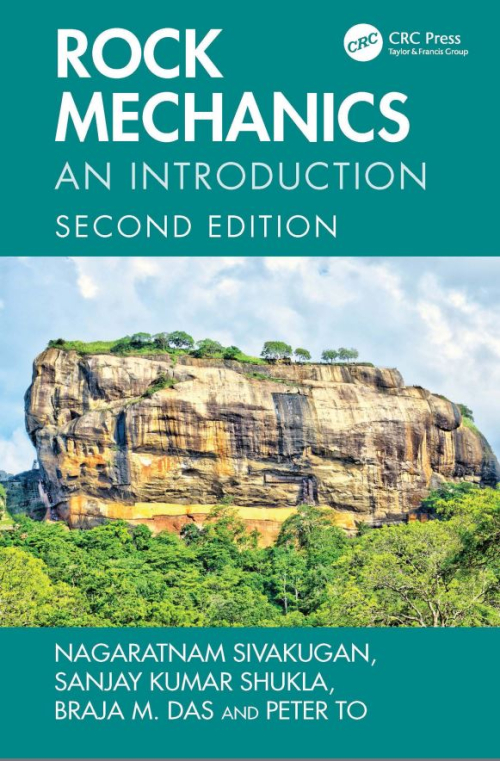
The earth materials that make up the relatively thin outer shell, called the crust, of the Earth are categorised by civil engineers as soils and rocks. These materials are made up of small crystalline units known as minerals. A mineral is basically a naturally occurring inorganic substance composed of one or more elements, with a unique chemical composition, unique arrangement of elements (crystalline structure) and distinctive physical properties.
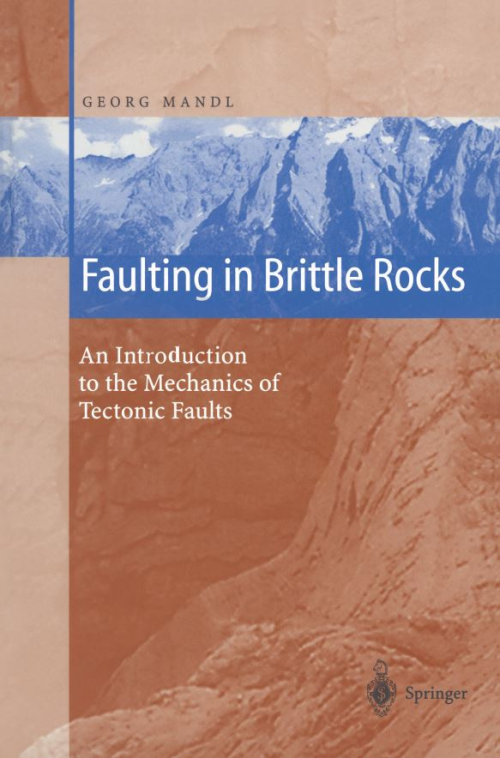
This book provides an introduction into the mechanics of faulting in the brittle crust of the Earth. It developed from my annual two-semester course on tectonomechanics for graduate students of engineering geology and of rock engineering at the Technical University of Graz (Austria).
What should geotechnical engineers be able to do and how should they acquire these skills? J. Atkinson New generation geo-engineering F.B.J. Barends Teaching rock mechanics in the classroom and on the UNI-Nettuno Network G.Barla Personal reflections on the teaching of soil mechanics J.B. Burland Geotechnical engineering collaboration between clients, consultants, contractors and universities: A European perspective M. Devriendt Engineering geology at University Complutense of Madrid: 30 years of postgraduate courses L.I. Gonzalez de Vallejo & M. Ferrer
Simply stated, a material model is a mathematical relationship describing the stressstrain behaviour of a small but finite quantity of material, and is often termed a ‘constitutive model’.The formulation of the material model forms an important step in obtaining solutions for practical engineering problems and, once established, it can be employed in a numerical solution code suitable for the analysis of geomechanical structures, with given boundary conditions, material zones and loading.
1. CONSTITUTIVE MODELS FOR GEOMATERIALS 1.1 Mathematical formulation On the incremental behaviour of granular soils F Calvetti, C. Tamagnini & G. Viggiani Micromechanical model for softening and dilatation of rock joints A. Misra On failure criteria incorporating a scalar anisotropy parameter D. Lydzba & S. Pietruszczak A new macroscopic approach for brittle damage: anisotropy and unilateral effect H. Welemane & F. Cormery A constitutive model for North Sea Chalk: application to reservoir compaction and waterflooding R. Charlier, F. Collin, C. Schroeder, P. Illing, P. Delage, Y.J. Cui & V De Gennaro Modelling principal stress rotation effects with multilaminate type constitutive models for clay H.P. Neher, M. Cudny, C. Wiltafsky & H.F. Schweiger