Добрый день, Коллеги. Важное сообщение, просьба принять участие. Музей Ферсмана ищет помощь для реставрационных работ в помещении. Подробности по ссылке
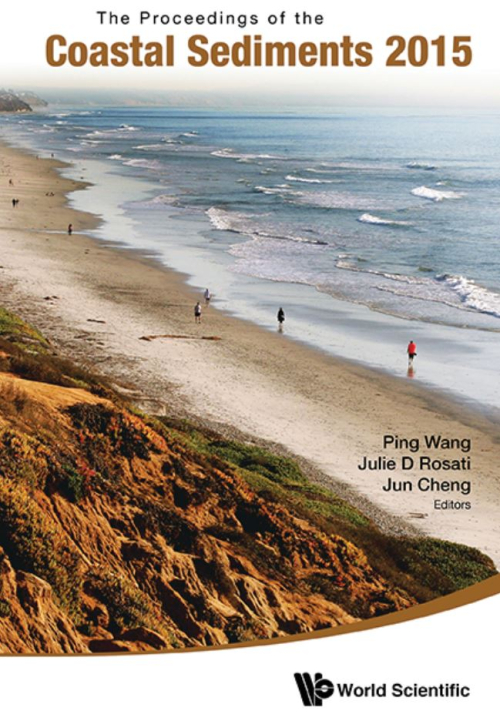
The Proceedings of the Coastal Sediments ’15 is dedicated to our dear friend, colleague, and mentor, Dr. Robert G. Dean (1930-2015). Dr. Dean was a member of the National Academy of Engineering, a Distinguished Member of the American Society of Civil Engineers (ASCE), an ASCE Diplomate in Coastal Engineering, the Coastal Award winner at Coastal Sediments ‘11, and the loving father of our conference co-chair Julie Dean Rosati. Dr. Dean’s tremendous contributions to coastal science and engineering have and continue to inspire us to be curious about the coast and find new solutions to complicated coastal problems. Throughout his over 50 years of teaching at the University of Florida, University of Delaware, University of Washington, and Massachusetts Institute of Technology, Dr. Dean mentored numerous students who are now leading researchers and practitioners in the fields of coastal engineering and science. It is with great honor and privilege that we dedicate these CS15 volumes in his memory. <...>
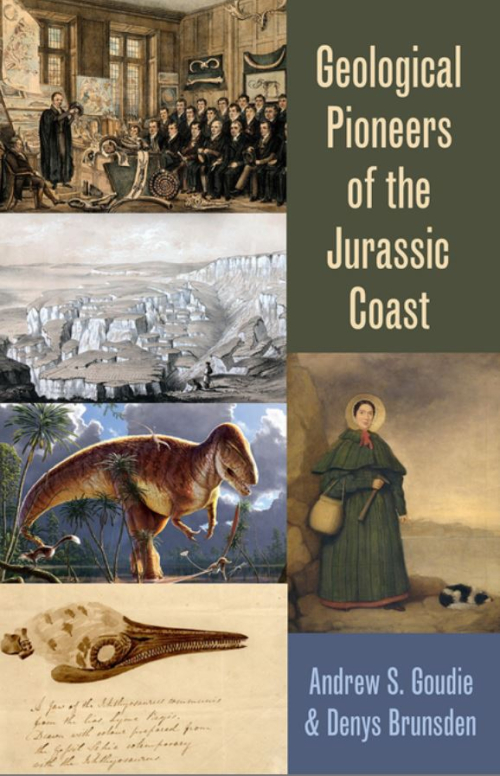
The purpose of this book is to recount the lives and achievements of some of the great geologists and geomorphologists who have studied the Jurassic Coast, England’s only natural World Heritage Site, and have made it the Mecca that it has become for all those interested in Earth Science since the late seventeenth century. We classify these individuals into six groups: the earliest investigators, the fossil collectors, the geologists of the so-called Golden Age, the geological mappers, gifted stratigraphers and palaeontologists, and remarkable amateurs and some other stars.
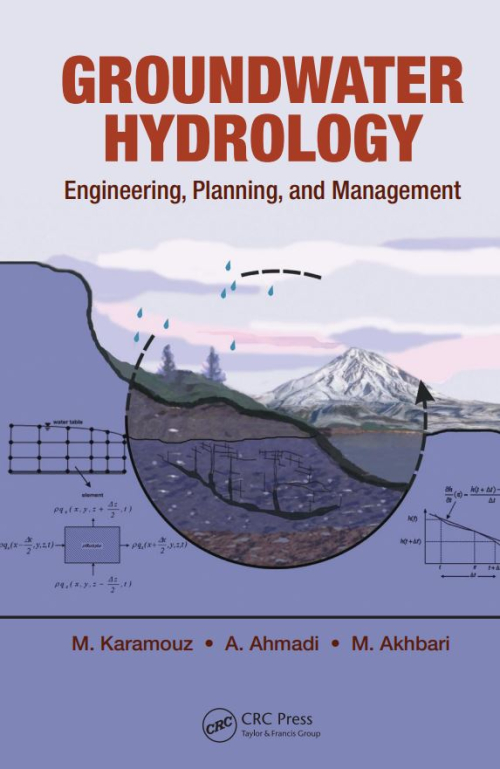
The demand for freshwater is increasing as the world’s population continues to grow and expects higher standards of living. Water conservation, better systems’ operation, higher end use, and water allocation efficiencies have not been able to offset the growing demand. Many societies are struggling to bring supply and demand to a sustainable level. Although water is abundant on earth, freshwater accounts only for about 2.5% of global water reserves. Out of this amount, approximately 30% is stored as groundwater and the same amount is on the surface as rivers and lakes; the remaining reserves are held in glaciers, ice caps, soil moisture, and atmospheric water vapor. Groundwater is a source of vital natural flow.
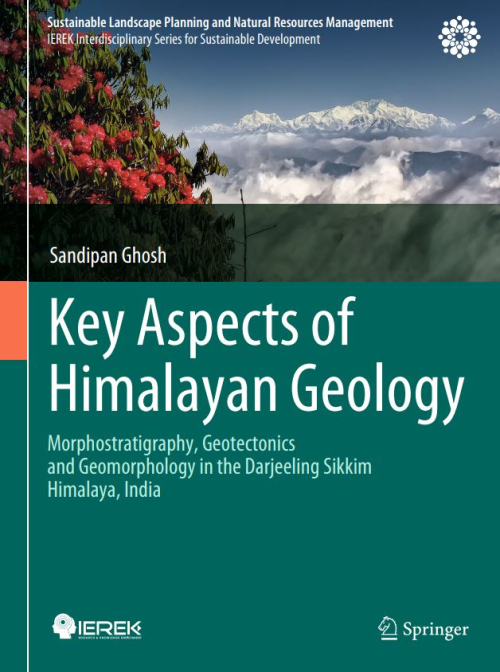
The Eastern Himalaya begins in the Darjeeling-Sikkim Himalaya (DSH). It is situated between Nepal and Bhutan to the east and west, respectively. The third highest mountain on Earth, Kanchenjunga (8586 m elevation from mean sea level), is shared between Sikkim and Nepal in the west, while the Yadong-Gulu rift graben is flanked by the ridge line that forms Sikkim’s eastern boundary. The DarjeelingSikkim Himalaya’s northern limit is defined by the South Tibet Detachment (STD) system, which includes a tiny piece of the Tibetan plateau, while its southern boundary is defined by the Main Frontal fault system.
Anyone who takes the trouble to look up all the entries that have been filed under "Calcium Carbonate" in a university library will be surprised - if not overwhelmed - by the enormous amount of literature that is concerned in one way or another with this subject. Most of the corresponding books and journals can be assigned to the realms of chemistry, but they also include technical, geological and mineralogical literature. A continued search will eventually unearth works on the history of the arts and architecture. This is because calcium carbonate minerals, be they in the form of chalk, limestone or marble, symbolize defining moments in the history of our culture - the first prehistoric cave drawings in simple coloured chalk, the gigantic limestone blocks used to build the Egyptian pyramids and the marble statues of Michelangelo and Bernini.
Magmas are mixtures of melt, crystals and dissolved gasses with or without crystalline material (Mysen and Richet 2019). They play an important role in igneous processes particularly those influenced by their viscosity, density, and other physical properties. Much of the research to date has used quenched melts (or glasses) as proxies for studying the melt portion of magmas.
The experimenter is confronted nearly every day with the examination of results from his or her own experiments as well as those of others. There is a need to know the methods by which the data were obtained and what confidence can be placed in the numerical results. Significant aspects of these matters involve the principles and methods of statistics, and the jective of this chapter is to describe the basic ideas of statistics that are relevant to errors of observations and numbers derived from these observations.
Continuous Perspective Query Processing for 3-D Objects on Road Networks Joon-Seok Kim, Kyoung-Sook Kim, and Ki-Joune Li A GIS Based Approach to Predicting Road Surface Temperatures Richard Fry, Lionel Slade, George Taylor, and Ian Davy Thematic Clustering of Geographic Resource Metadata Collections Javier Lacasta, Javier Nogueras-Iso, Pedro Rafael Muro-Medrano, and Francisco Javier Zarazaga-Soria The Need for Web Legend Services Benedicte Bucher, Elodie Buard, Laurence Jolivet, and Anne Ruas
The Al2SiOs polymorphs continue to be of paramount importance in metamorphic petrology. Their usefulness stems from their abundance in metapelites, the fact that some isograd reactions in metapelites correspond to polymorphic transformations involving the aluminum silicates, and the simple pressure-temperature (P- T) phase equilibrium relations of the Al2SiOs system. Although numerous other thermo barometers have been developed and utilized (especially within the last decade), petrologists still consider the AI2SiOs polymorphs for primary thermo barometry of metamorphic rocks. In fact, the Al2SiOs phase equilibria are used to calibrate other geothermometers and geobarometers. The following review highlights some landmark papers exemplifying the petrologic significance of the Al2SiOs polymorphs. <...>
The monograph series published by the Mineralogical Society has until now been concerned mainly with the application of techniques like X-ray diffraction, thermal analysis, infrared spectroscopy and electron optical methods to the identification and study of clay minerals. Inevitably much information about the chemical constitution was contained within these volumes and was essential to them. However, it seemed that there was also a need for a monograph that contained all this information in one volume and also covered some wider aspects of clay chemistry such as their colloid behaviour and surface chemistry, their reactions with organic substances and to heating, and the chemical conditions necessary for their formation.