Добрый день, Коллеги. Важное сообщение, просьба принять участие. Музей Ферсмана ищет помощь для реставрационных работ в помещении. Подробности по ссылке
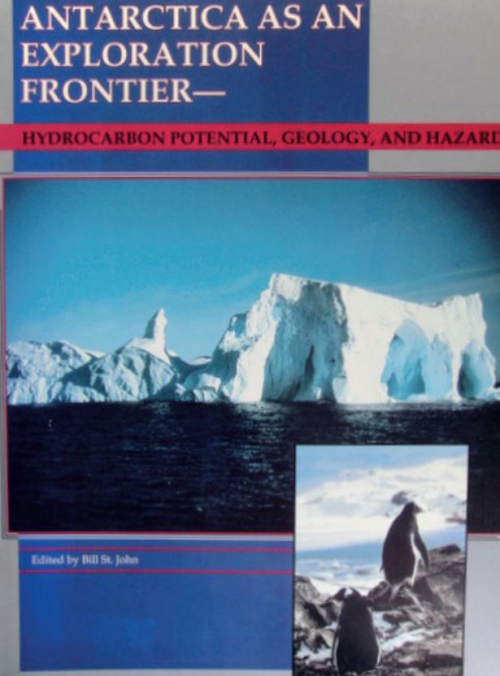
During the 1987 United States Antarctic Program-Polar Duke Cruise, 3200 kilometers of seismic reflection profiles were collected on the northern Antarctic Peninsula shelf. These data, plus the results of land-based studies (from Polish and U.S. scientists) and ocean drilling (DSDP Leg 35) were used to reconstruct the tectonic and climatic development of the shelf and to assess possible hydrocarbon prospects of the region.
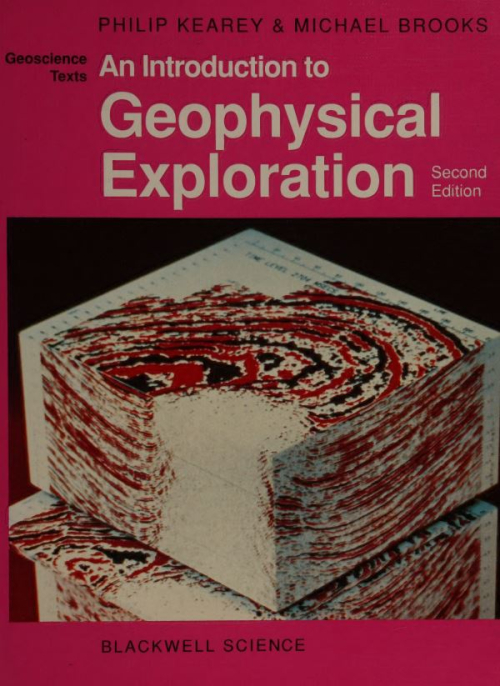
This book provides a general introduction to the most important methods of geophysical exploration. These methods represent a primary tool for investigation of the subsurface and are applicable to a very wide range of problems. Although their main application is in prospecting for natural resources the methods are also used, for example, as an aid to geological surveying, as a means of deriving information on the Earth’s internal physical properties, and in engineering or archaeological site investigations.
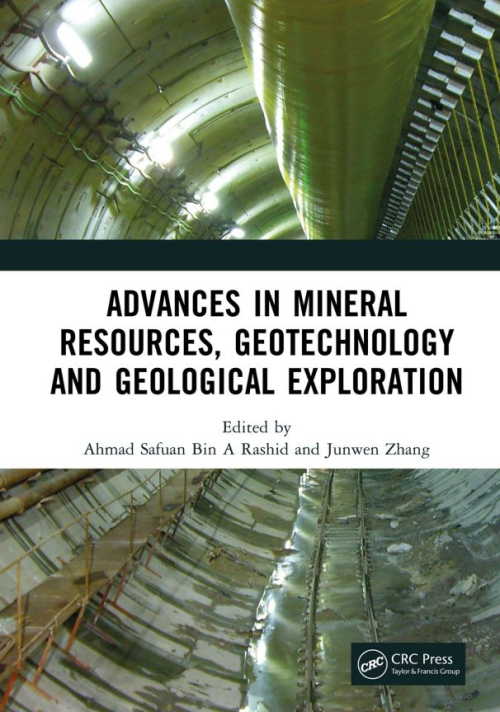
Mineral resources exploration and mining restoration technology Semi-industrial test research on beneficiation of a lead-zinc ore with high oxidation rate in southern Shaanxi J. J. Wu, Q. Nie, H.X. Dai, P. Lu, L. Ma & WH. Li Application progress of reversed-phase emulsion polymerization system in oil and gas field development K. Xu, Y. Shi, J Chang & Y Li Review of simultaneous hydraulic fracturing technology and field application X. Wu, L.Y. Mu, K. Ning, Y. Qiao, G.H. Yuan, L.T Shang & S.L. Zhang Practical research on the application of inflow-control technology in desert oilfield D.X. Duan, F. Qian, N. Jing, X.Y. Wang, C. Zhou, Q.Y. Gao, K. Ning &X. Wu Research on the optimization of the re-open sequence of oil producers in the process of oilfield production resuming H.Y. Lyu, M.FLiu & R. Wang
This is a book about the why and how of doing experiments on rocks, minerals, magmas, and fluids. It could have as logically been subtitled "Experimental petrology" as "Experimental geochemistry," but we chose geochemistry to emphasize the broad and overlapping nature of current experimental work. We have tried to aim the book at a general readership which we hope will include advanced undergraduate students, graduate students, and anyone else interested in learning something about experimental petrology.
Although the ocean covers more than two thirds of the Earth's surface, the processes of accumulation of sediments on the seafloor have been insufficiently studied. For many years, the efforts of researchers were concentrated on the study of the continents. By studying sediments in various parts of the oceans in space and in time, I will attempt to establish the processes governing the formation of sediments in the oceans as a whole. The present monograph is my second book on the subject of the formation and accumulation of oceanic deposits. In 1972, a book entitled Sedimentation in the ff/orM
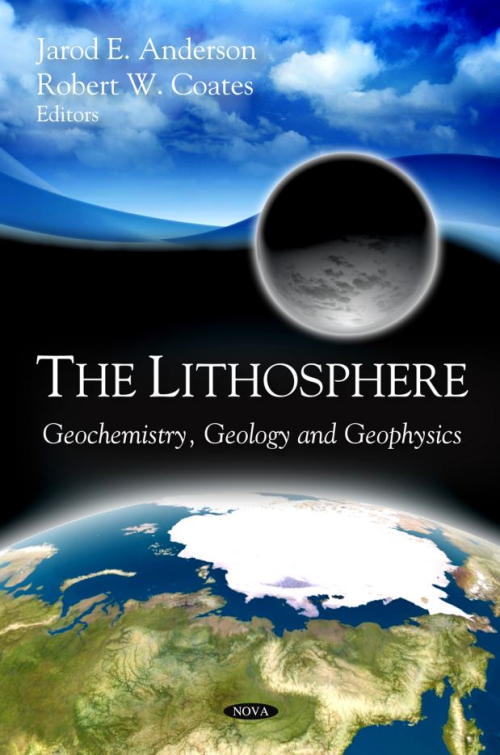
The lithosphere is the outer solid part of the earth, including the crust and uppermost mantle. The lithosphere is about 100 km thick, although its thickness is age dependent (older lithosphere is thicker). The lithosphere below the crust is brittle enough at some locations to produce earthquakes by faulting, such as within a subducted oceanic plate. This new book presents leading research in the field from around the globe. Some physical problems related to modeling the conditions of the formation and evolution of the lithosphere are discussed. It is shown that if we take into account both the effects of thermal expansion and compressibility we could receive results with no change or even an increase of density under the P-T conditions within the lithosphere.
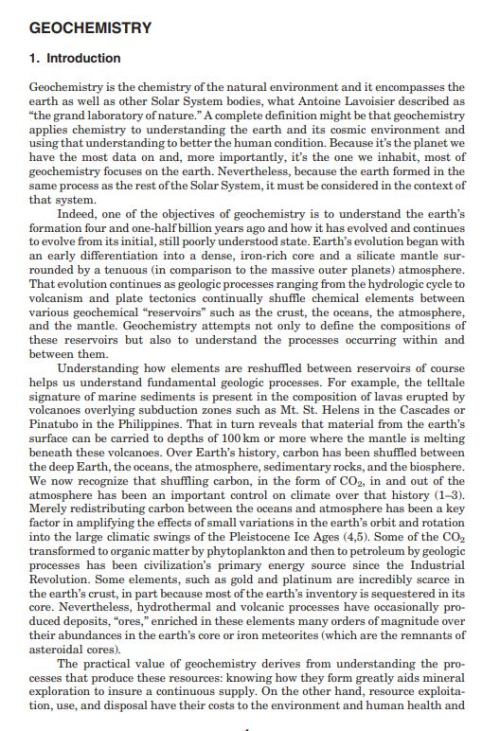
Geochemistry is the chemistry of the natural environment and it encompasses the earth as well as other Solar System bodies, what Antoine Lavoisier described as “the grand laboratory of nature.” A complete definition might be that geochemistry applies chemistry to understanding the earth and its cosmic environment and using that understanding to better the human condition.
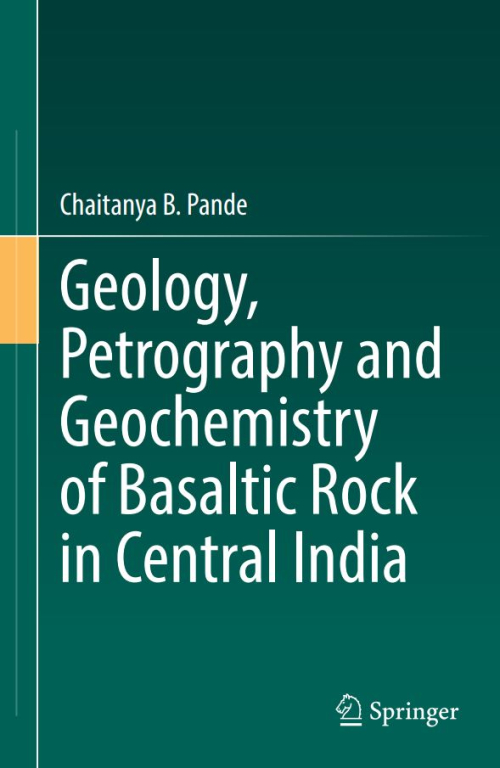
The state of Maharashtra is located in the country’s peninsular shield region, with hard rock formations covering around 94% of the total geographical area and sedimentary and alluvial deposits covering the remaining 6%. Basaltic lava flows cover around 80% of the state, with overlying alluvium confined to places near major rivers and streams. Alluvial deposits of shallow thickness, consisting of gravely, sandy, and clayey mixtures, are found in abundance along stream courses. With an estimated extent of 5,18,000 sq. km, Deccan Traps is one of the world’s largest accumulations of continental flood basalt.
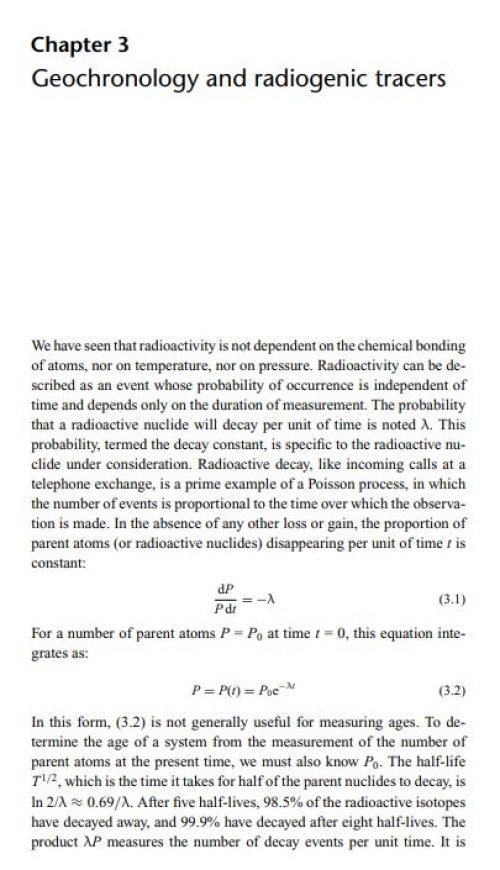
We have seen that radioactivity is not dependent on the chemical bonding of atoms, nor on temperature, nor on pressure. Radioactivity can be described as an event whose probability of occurrence is independent of time and depends only on the duration of measurement. The probability that a radioactive nuclide will decay per unit of time is noted λ. This probability, termed the decay constant, is specific to the radioactive nuclide under consideration. Radioactive decay, like incoming calls at a telephone exchange, is a prime example of a Poisson process, in which the number of events is proportional to the time over which the observation is made. In the absence of any other loss or gain, the proportion of parent atoms (or radioactive nuclides) disappearing per unit of time t is constant <...>
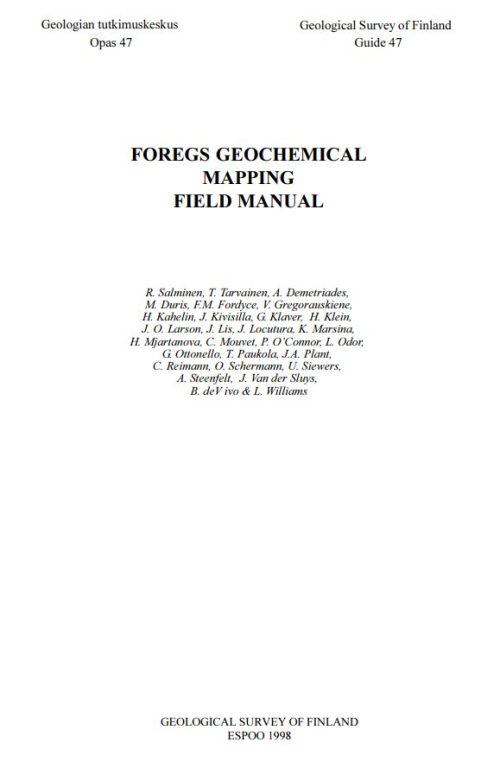
FOREGS (Forum of European Geological Surveys) Geochemical Baseline Programme has been initiated to provide high quality environmental geochemical baseline data for Europe. The data will be based on samples of stream water, stream sediment, floodplain sediment, soil, and humus collected all over Europe. High quality and consistency of the obtained data are ensured by using standardised sampling methods and by treating and analysing all samples in the same laboratories. This programme represents the European contribution to the International Union of Geological Sciences (IUGS)/ International Association of Geochemistry and Cosmochemistry (IAGC) Working Group on Global Geochemical Baselines. The sampling instructions are based on the recommendations of the IGCP 259 and IGCP 360 programmes. The present report contains comprehensive instructions for sample site selection and sample collection. In addition, a summary of methods intended for sample preparation and analysis is included.