Добрый день, Коллеги. Важное сообщение, просьба принять участие. Музей Ферсмана ищет помощь для реставрационных работ в помещении. Подробности по ссылке
Before describing the Ammonitidae of the Lias I purpose giving a short account of the several zones of life into which this great formation is divided, with the view of defining their statigraphical distribution in time and space. More ample details on the subject will be found in the various works cited in the synonyms prefixed to the description of the different zones.
Life with Ore Deposits on Earth, our Biennial tagline, directly addresses many of the underpinning geoscience issues related to this new future. It is both exciting and daunting – but it must start with leading-edge research on understanding our Earth’s natural resources, and how we can responsibly explore for, and extract them to securely deliver the future we all want to see for our children.
This book would not have been as it is without the trenchant editing of Heather Godwin, nor without the punctilious attentions of Stuart Proffitt. I owe them both a great debt. I sincerely thank Robin Cocks and Neale Monks for acting as scientific readers, and for commenting on sundry facts. Claire Mellish kindly drew two of the diagrams. I particularly thank Chris Stringer, Theya Molleson and Robert Kruszynski for anthropological advice. Many friends and colleagues helped me by providing illustrations and advice (they carry no responsibility if I did not heed the latter).
Limit analysis is concerned with the development of efficient methods for computing the collapse or limit load of structures in a direct manner. It is therefore of intense practical interest to practicing engineers. There have been an enormous number of applications in metal structures. Applications of limit analysis to reinforced concrete structures are more recent and are given in two recent books (W.F. Chen, ‘Plasticity in Reinforced Concrete’, McGraw-Hill, 1982; M.P. Nielsen, ‘Limit Analysis and Concrete Plasticity’, Prentice-Hall, 1984). Applications to typical stability problems in soil mechanics have been the most highly developed aspect of limit analysis so that the basic techniques and many numerical results were summarized in the 1975 book by Chen entitled ‘Limit Analysis and Soil Plasticity’, Elsevier.
Epithermal Au and Ag deposits of both vein and bulk-tonnage styles may be broadly grouped into high-sulfidation (HS), intermediate-sulfidation (IS), and low-sulfidation (LS) types based on the sulfidation states of their hypogene sulfide assemblages. The HS and LS types may be subdivided using additional parameters, particularly related igneous rock types and metal content.
Linking diagenesis to sequence stratigraphy: an integrated tool for understanding and predicting reservoir quality distribution S. Morad, J.M. Ketzer and L.F. De Ros
The occurrence of glaucony in the stratigraphic record: distribution patterns and sequencestratigraphic significance A. Amorosi Sequence architecture and palaeoclimate controls on diagenesis related to subaerial exposure of icehouse cyclic Pennsylvanian and Permian carbonates G.J.A. Buijs and R.H. Goldstein Sequence stratigraphic influence on regional diagenesis of a mixed carbonate-siliciclastic passive margin, Eocene, N.C., USA B.P. Coffey
This paper describes a methodology of translating mineral deposit models into flexible probabilistic structures based on (1) extraction of ore components (fluids, metals, and ligands) from crustal or mantle sources or both, (2) fluid- or melt-assisted transport of ore components from source to trap zones, (3) formation of trap zones (i.e., effective melt or fluid channels) that can focus melt or fluid migration and accommodate large amounts of metal, and (4) operation of the physicochemical processes that promote and sustain the deposition of metal from fluids or melts passing through a particular trap site.
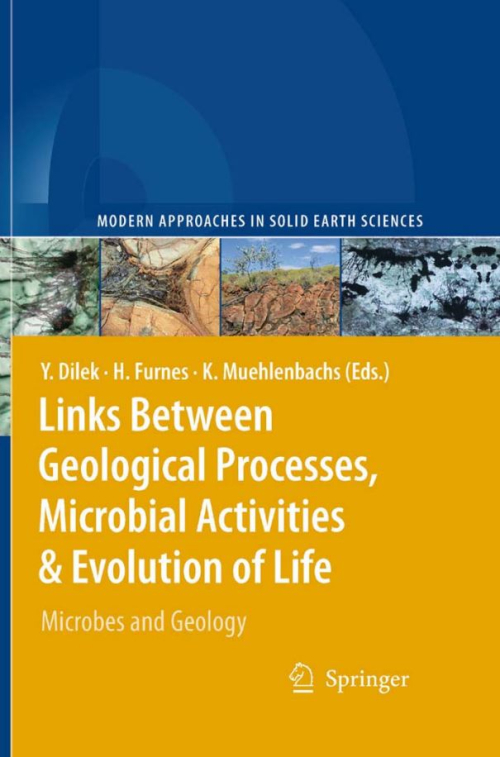
Geobiology is a rapidly growing and truly interdisciplinary field at the interface between earth and life sciences, and mainstream research in geobiology involves microbes and microbial activities at all scales in different geological environments through time in Earth’s history. This research and its findings have strong implications for the evolution of life on the Earth and potentially in other planets.