Добрый день, Коллеги. Важное сообщение, просьба принять участие. Музей Ферсмана ищет помощь для реставрационных работ в помещении. Подробности по ссылке
В сборнике представлены материалы IX Всероссийской научной конференции с международным участием им. проф. В.В. Зайкова «Геоархеология и археологическая минералогия-2022». Издание включает материалы, посвященные анализу технологических традиций доисторического прошлого, выявленных с помощью естественно-научных методов исследований.
В диссертационной работе рассматриваются закономерности метаморфического минералообразования в породах зоны сочленения двух крупнейших блоков Фенноскандинавского щита – Свекофеннского подаижного пояса (СПП) и Карельского кратона (КК). Эта зона известна под названием Раахе-Ладожской шовной структуры (рис. I-1-1, врезка), юго-восточный фрагмент которой на территории Северного Приладожья (Россия) представлен Мейерской тектонической зоной (МТЗ) (Балтыбаев и др., 1996; Шульдинер и др., 1997; Балтыбаев, Вивдич, 2021).
Выяснение роли гранитоидного магматизма Приладожья в формировании и распределении различных типов оловянного оруденения представляет собой важную научную задачу, особенно в связи с необходимостью прироста запасов оловянного сырья и обнаружения новых месторождений и рудопроявлений в перспективном и промышленно развитом рудном районе.
Несмотря на то, что господствующей в настоящее время тектонической парадигме – тектонике плит – более полувека, многие положения для раннего докембрия остаются дискус-сионными. Решить их можно только на основе изучения типоморфных структур архейско-раннепротерозойского возраста.
Central America comprises 7 countries (Fig. 1.1) that cover 50 million hectares extending over different ecoregions (Fig. 1.2a) and shelter nearly 39 million people (2003). With a relatively high population density (71 inhabitants/km2), Central America is one of the world’s regions most prone to geology-related and climaterelated natural disasters. Earthquakes and volcanic eruptions, which are related to the Central American tectonic setting, and landslides, which are either earthquake induced or rainfall-related, are the most severe geological burdens of the region. Central America also is afflicted by several climatic hazards, particularly droughts and hurricanes, which may be accompanied by secondary hazards, including high winds, flooding and landslides.
В сборнике представлены материалы VII Всероссийской научной конференции «Геоархеология и археологическая минералогия-2020».
Первая часть сборника посвящена актуальным проблемам геоархеологии – познанию и анализу хозяйственных связей в древности, сочетанию технологических традиций и инноваций в исторической перспективе. Во второй части рассматриваются различные естественно-научные методы исследований археологических объектов и, в первую очередь, – изотопные. Следующие разделы посвящены развитию минерально-сырьевой базы древних обществ, выявлению особенностей палеокерамического производства и методик обработки каменного материала. Отдельно характеризуются древние металлургические комплексы, а также продукты металлургического передела и металлообработки. В последнем разделе собраны результаты применения ГИС-технологий, предназначенные для поиска и изучения археологических объектов. Издание рассчитано как на археологов, историков, музейных работников, так и на геологов. Оно будет также полезно студентам, аспирантам, и специалистам – всем интересующимся использованием полезных ископаемых на разных этапах развития человечества.
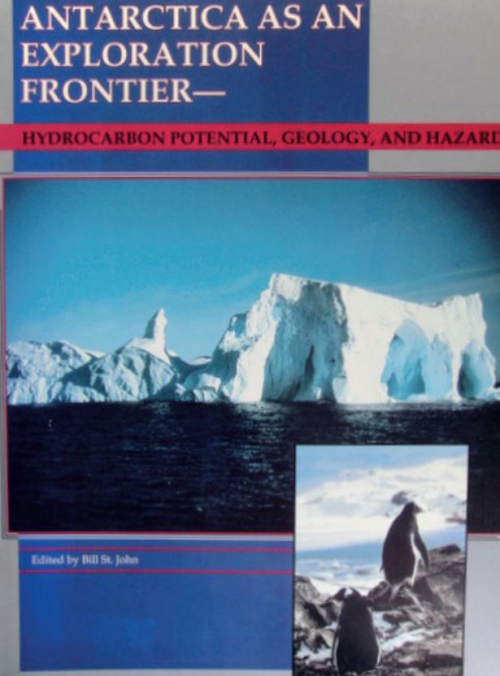
During the 1987 United States Antarctic Program-Polar Duke Cruise, 3200 kilometers of seismic reflection profiles were collected on the northern Antarctic Peninsula shelf. These data, plus the results of land-based studies (from Polish and U.S. scientists) and ocean drilling (DSDP Leg 35) were used to reconstruct the tectonic and climatic development of the shelf and to assess possible hydrocarbon prospects of the region.
The lithosphere is the outer solid part of the earth, including the crust and uppermost mantle. The lithosphere is about 100 km thick, although its thickness is age dependent (older lithosphere is thicker). The lithosphere below the crust is brittle enough at some locations to produce earthquakes by faulting, such as within a subducted oceanic plate. This new book presents leading research in the field from around the globe. Some physical problems related to modeling the conditions of the formation and evolution of the lithosphere are discussed. It is shown that if we take into account both the effects of thermal expansion and compressibility we could receive results with no change or even an increase of density under the P-T conditions within the lithosphere.
1 Corresponding Main Metallogenic Epochs to Key Geological Events in the North China Craton: An Example for Secular Changes in the Evolving Earth Mingguo Zhai and Xiyan Zhu Part I Archean Crustal Growth and Metallogeny 2 Archean Continental Crust in the Southern North China Craton
Chunrong Diwu, Chengli Zhang, and Yong Sun 3 Structural Architecture and Spatial-Temporal Distribution of the Archean Domains in the Eastern North China Craton Peng Peng
In the years since the 1977 Aegean conferences in Athens and Izmir there has been an explosion of new information on the Eastern Mediterranean, particularly on the Turkish area. Some three years ago we sensed that the time might be ripe for a meeting to consider all aspects of geology relevant to the tectonic evolution of the Eastern Mediterranean. We sounded out opinion in most of the European laboratories involved and received enthusiastic support for the idea. The boundaries of the area to be discussed were fixed early on: the Apennines to the west, the Carpathians and Caucasus to the north, the Zagros to the east and North Africa to the south. The meeting concentrated on the Late Palaeozoic to Recent evolution, as few coherent tracts of older rocks exist in the area.