Добрый день, Коллеги. Важное сообщение, просьба принять участие. Музей Ферсмана ищет помощь для реставрационных работ в помещении. Подробности по ссылке
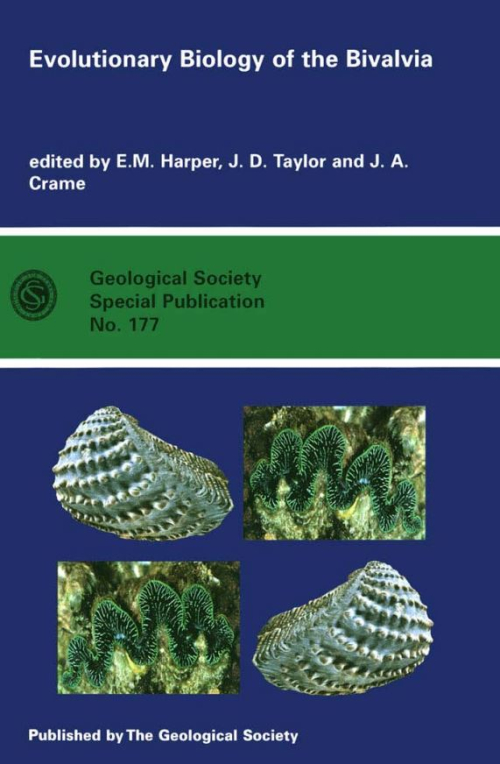
Harper, E. M., Taylor, J. D. & Crame, J. A. Unravelling the evolutionary biology of the Bivalvia: a multidisciplinary approach Steiner, G. A. & Hammer, S. Molecular phylogeny of the Bivalvia inferred from 18S rDNA sequences with particular reference to the Pteriomorphia Campbell, D. C. Molecular evidence on the evolution of the Bivalvia Carter, J. G., Campbell, D. C. & Campbell, M. R. Cladistic perspectives on early bivalve evolution Cope, J. C. W. A new look at early bivalve phylogeny Skelton, P. W. & Smith, A. B. A preliminary phylogeny for rudist bivalves: sifting clades from grades Harper, E. M., Hide, E. A. & Morton, B. Relationships between the extant Anomalodesmata: a cladistic test Lydeard, C., Minton, R. L. & Williams, J. D. Prodigious polyphyly in imperilled freshwater pearly-mussels (Bivalvia: Unionidae): a phylogenetic test of species and generic designations
Consideration of the nature and occurrence of landslide hazards leads to perspectives on the dominant role of landsliding in the geomorphology of active orogens, and consequently the major role that landsliding plays in determining hazard- and riskscapes both within and downstream of these areas. Discussion of landslide risks suggests that probabilistic analyses are only likely to be reliable in planning location-specific landslide risk management strategies for small, frequent events, and the potential for identifying sites of future landslidesdboth rainfall generated and coseismicdis examined. Finally the role of landslides in triggering consequential hazards, such as tsunami, river flooding, and debris flows, is emphasized. <...>
Introduction to the Red Sea: Its Origin, Structure, and Environment Najeeb M.A. Rasul, Ian C.F. Stewart, and Zohair A. Nawab The Red Sea: Birth of an Ocean Enrico Bonatti, Anna Cipriani, and Luca Lupi Geological Evolution of the Red Sea: Historical Background, Review, and Synthesis William Bosworth Seafloor Spreading Initiation: Geophysical and Geochemical Constraints from the Thetis and Nereus Deeps, Central Red Sea Marco Ligi, Enrico Bonatti, and Najeeb M.A. Rasul
Giovanni Ruggieri and Fabrizio Gherardi Editorial for Special Issue "Geological and Mineralogical Sequestration of CO2" Bruno SaftiC, Iva Kolenkovic MoCilac, Marko CvetkoviC, Domagoj Vulin, Josipa VeliC and Bruno Tomljenovic Potential for the Geological Storage of CO2 in the Croatian Part of the Adriatic Offshore Nikolaos Koukouzas, Petros Koutsovitis, Pavlos Tyrologou, Christos Karkalis and Apostolos Arvanitis Potential for Mineral Carbonation of CO2 in Pleistocene Basaltic Rocks in Volos Region (Central Greece) Anja Sundal and Helge Hellevang
In civil engineering, tunnel construction has always been based on observations far more than any other construction. Reason for this phenomenon can be seen in the fact, that there is no other condition as decisive as the changing ground conditions in underground construction. Observational methods by their nature are subject of experience, especially when using predominantly manual methods for construction. Experience can be explained as kind of data base of an individual.
For decades, the base of the Hettangian (the Triassic-Jurassic system boundary) in the terrestrial succession of the Newark Supergroup of eastern North America has been placed incorrectly at a stratigraphic level that coincides with a modest palynological turnover immediately beneath the lowest basalt flow of the Central Atlantic Magmatic Province (CAMP), e.g. the Orange Mt. Basalt in the Newark basin or the North Mountain Basalt in the Fundy basin (see review in Whiteside, et al., 2007). According to numerous studies (reviewed in Whiteside, et al., 2007),
Section I: Subaqueous Eruption Dynamics Water/Magma Interaction: Physical Considerations for the Deep Submarine Environment Kenneth H. Wohletz Phreatomagmatic Explosions in Subaqueous Volcanism Bernd Zimanowski and Ralf Buttner Melting of Ice by Magma-Ice-Water Interactions During Subglacial Eruptions as an Indicator of Heat Transfer in Subaqueous Eruptions Magnus T. Gudmundsson Pyroclastic and Hydroclastic Deposits on Loihi Seamount, Hawaii David A. Clague, R. Batiza, James W. Head III, and АИсё S. Davis
After every major earthquake, the Earth rings like a large bell for several days. These free oscillations of the Earth are routinely detected at modern broad-band seismographic stations, which are now distributed globally. The eigenfrequencies and decay rates of the vibrations can be measured and used to constrain the radial and lateral distribution of density, seismic wave speed and anelastic attenuation within the interior.