Добрый день, Коллеги. Важное сообщение, просьба принять участие. Музей Ферсмана ищет помощь для реставрационных работ в помещении. Подробности по ссылке
Molecular dynamics is recognized as a powerful method in modern computational physics. This method is essentially based on a factual observation: the apparent strong complexity and extreme variety of natural phenomena are not due to the intrinsic complexity of the physical laws but due to the very large number of basic elements in interaction through, in fact, simple laws. This is particularly true for granular materials in which a single intergranular friction coefficient between rigid grains is enough to simulate, at a macroscopic scale, the very intricate behavior of sand with a Mohr–Coulomb plasticity criterion, a dilatant behavior under shearing, non-associate plastic strains, etc. and, in fine, an incrementally nonlinear constitutive relation. Passing in a natural way from the grain scale to the sample scale, the discrete element method (DEM) is able to precisely bridge the gap between micro and macro-scales in a very realistic way, as it is today verified in many mechanics labs. <...>
Available knowledge concerning the origin and geologic structure of Mexico is still incomplete. Each day scientific discoveries, advances in mapping, and new techniques of exploration offer more information toward the development of our understanding. Nevertheless, it is still difficult to achieve a complete description of the geologic character of the territory of the nation, as well as to work out functional models to explain the origin of its geologic structure. Along with the development of geologic studies that science has made in Mexico, there have been a few attempts to formulate general works covering the many aspects of geology that the country presents. Nevertheless, one must recognize that the lack of information about certain periods in the geological history of the national territory, and the numerous unexplored areas, have constituted some principal obstacles toward achieving a finished work of this type <...>
Primitive Asteroids and Meteorites was born as a collaboration among members of NASA’s Asteroid Redirect Mission (ARM) Formulation Assessment and Support Team (FAST). As such, we own a great debt of gratitude to Daniel D. Mazanek and David M. Reeves at NASA’s Langley Research Center, to Paul A. Abell at the Johnson Space Center, to Michele Gates at NASA Headquarters, and to countless others who worked in developing this mission. In many ways, ARM allowed for asteroid exploration and mining to move into the tangible realm. ARM brought together a diverse and very passionate group of scientists and engineers who have made the study of meteorites, asteroids, and how to get us there into their lives’ work.
Slope profile analysis: the system of best units by A. young Hillslope process-response models based on the continuity equation by M. J.KIRKBY An application of the concept of threshold slopes to the Laramie Mountains, Wyoming by m. a. carson State, environment and attribute in scree-slope studies by j. в. thornes Micro-erosion processes and factors affecting slope development in the Lower Swansea Valley by e.m. bridges and d.m. harding Slope form and geomorphological process: an Australian example by R.R. ARNETT The role of snow avalanches in the evolution of alpine talus slopes by B.H.LUCKMAN Landsliding on the Jurassic escarpment near Rockingham, Northamptonshire by R.J. CHANDLER Some examples of mudflow and rockfall activity in north-east Ireland by D.B. PRIOR, N. STEPHENS and G.R. DOUGLAS Relationships between slope form and soil properties developed over Chalk parent materials by p.a.furley The relationship between soil patterns and slope form in the Ettrick Association, south-east Scotland by w. a. d. Whitfield and P. A. FURLEY The British Geomorphological Research Group The Institute of British Geographers Publications in print
Underground coal mining disturbs not only the overburden strata, but also the immediate floor strata. The former is much more significant because it involves strata from the seam level all the way to the surface, where structures and water resources important to human activities are located. The issues associated with the movement of overburden strata due to underground coal mining together comprise the subject of surface subsidence.
Harper, E. M., Taylor, J. D. & Crame, J. A. Unravelling the evolutionary biology of the Bivalvia: a multidisciplinary approach Steiner, G. A. & Hammer, S. Molecular phylogeny of the Bivalvia inferred from 18S rDNA sequences with particular reference to the Pteriomorphia Campbell, D. C. Molecular evidence on the evolution of the Bivalvia Carter, J. G., Campbell, D. C. & Campbell, M. R. Cladistic perspectives on early bivalve evolution Cope, J. C. W. A new look at early bivalve phylogeny Skelton, P. W. & Smith, A. B. A preliminary phylogeny for rudist bivalves: sifting clades from grades Harper, E. M., Hide, E. A. & Morton, B. Relationships between the extant Anomalodesmata: a cladistic test Lydeard, C., Minton, R. L. & Williams, J. D. Prodigious polyphyly in imperilled freshwater pearly-mussels (Bivalvia: Unionidae): a phylogenetic test of species and generic designations
Consideration of the nature and occurrence of landslide hazards leads to perspectives on the dominant role of landsliding in the geomorphology of active orogens, and consequently the major role that landsliding plays in determining hazard- and riskscapes both within and downstream of these areas. Discussion of landslide risks suggests that probabilistic analyses are only likely to be reliable in planning location-specific landslide risk management strategies for small, frequent events, and the potential for identifying sites of future landslidesdboth rainfall generated and coseismicdis examined. Finally the role of landslides in triggering consequential hazards, such as tsunami, river flooding, and debris flows, is emphasized. <...>
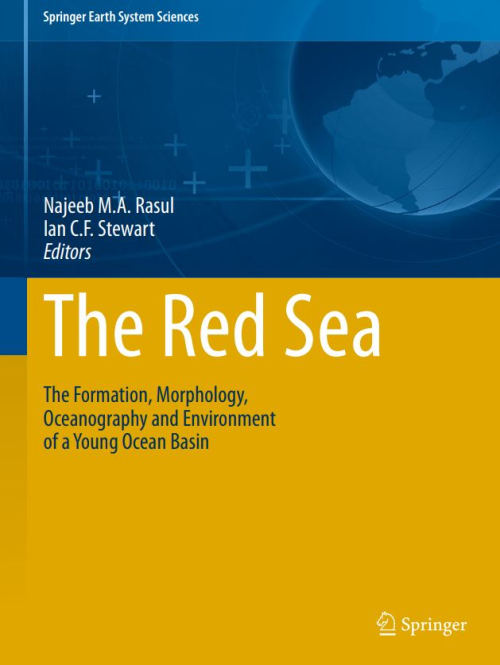
Introduction to the Red Sea: Its Origin, Structure, and Environment Najeeb M.A. Rasul, Ian C.F. Stewart, and Zohair A. Nawab The Red Sea: Birth of an Ocean Enrico Bonatti, Anna Cipriani, and Luca Lupi Geological Evolution of the Red Sea: Historical Background, Review, and Synthesis William Bosworth Seafloor Spreading Initiation: Geophysical and Geochemical Constraints from the Thetis and Nereus Deeps, Central Red Sea Marco Ligi, Enrico Bonatti, and Najeeb M.A. Rasul