Добрый день, Коллеги. Важное сообщение, просьба принять участие. Музей Ферсмана ищет помощь для реставрационных работ в помещении. Подробности по ссылке
Nucleosynthesis is the study of the nuclear processes responsible for the formation of the elements which constitute the baryonic matter of the Universe. The elements of which the Universe is composed indeed have a quite complicated nucleosynthesis history, which extends from the first three minutes of the Big Bang through to the present. Contemporary nucleosynthesis theory associates the production of certain elements/isotopes or groups of elements with a number of specific astrophysical settings, the most significant of which are: (i) the cosmological Big Bang, (ii) stars, and (iii) supernovae.
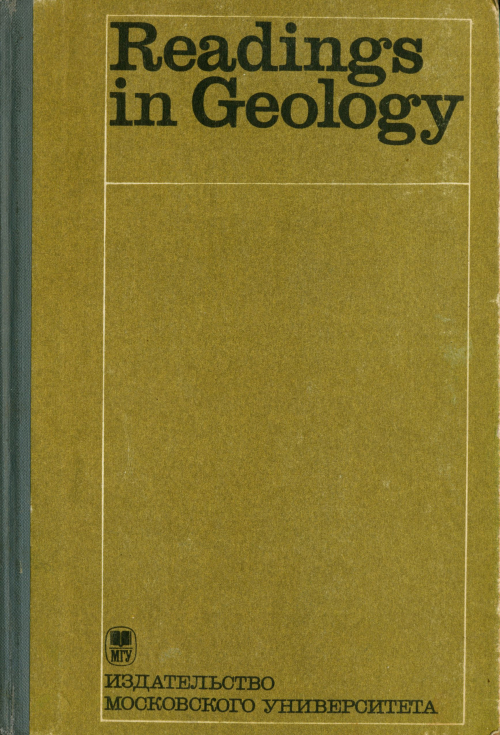
Предлагаемое пособие на английском языке представляет сборник текстов по научной тематике и предназначается для дополнительного аудиторного и внеаудиторного чтения на языке для студентов тарших курсов, для реферативных групп и аспирантов. Пособие включается тексты (или общенаучные тексты) по научной тематике. Тексты оригинальрные неадаптированные, подобранные из современных английских и американских источников
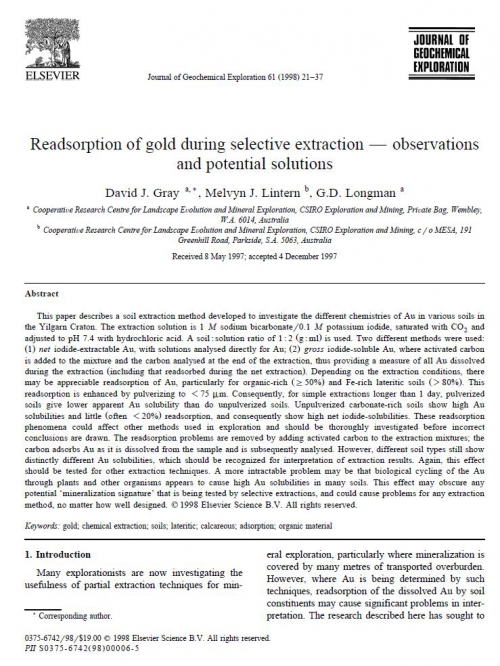
This paper describes a soil extraction method developed to investigate the different chemistries of Au in various soils in the Yilgarn Craton. The extraction solution is 1 M sodium bicarbonater0.1 M potassium iodide, saturated with CO2 and adjusted to pH 7.4 with hydrochloric acid. A soil : solution ratio of 1 : 2 Žg : ml. is used. Two different methods were used: Ž1. net iodide-extractable Au, with solutions analysed directly for Au; Ž2. gross iodide-soluble Au, where activated carbon is added to the mixture and the carbon analysed at the end of the extraction, thus providing a measure of all Au dissolved during the extraction Žincluding that readsorbed during the net extraction.. Depending on the extraction conditions, there may be appreciable readsorption of Au, particularly for organic-rich ŽG50%. and Fe-rich lateritic soils Ž)80%.. This readsorption is enhanced by pulverizing to -75 mm. Consequently, for simple extractions longer than 1 day, pulverized soils give lower apparent Au solubility than do unpulverized soils. Unpulverized carbonate-rich soils show high Au solubilities and little Žoften -20%. readsorption, and consequently show high net iodide-solubilities. These readsorption phenomena could affect other methods used in exploration and should be thoroughly investigated before incorrect conclusions are drawn. The readsorption problems are removed by adding activated carbon to the extraction mixtures; the carbon adsorbs Au as it is dissolved from the sample and is subsequently analysed. However, different soil types still show distinctly different Au solubilities, which should be recognized for interpretation of extraction results. Again, this effect should be tested for other extraction techniques. A more intractable problem may be that biological cycling of the Au through plants and other organisms appears to cause high Au solubilities in many soils. This effect may obscure any potential ‘mineralization signature’ that is being tested by selective extractions, and could cause problems for any extraction method, no matter how well designed
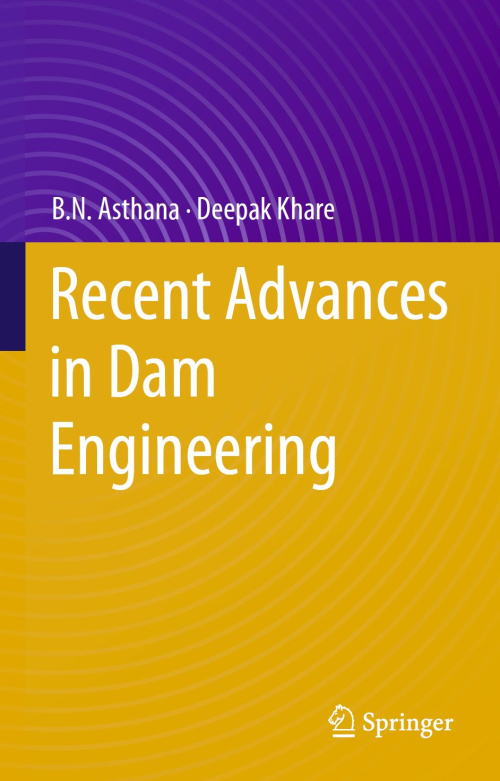
Water is essential for life. It is required for other uses also such as irrigation, industry, and power development. Its demand is increasing with the increase in population and changes in life style, whereas the availability is practically constant. In India, water is available as precipitation which is concentrated largely in a few months of monsoon season and snowfall in the higher mountains for an equally short time window. Rainfall in monsoon months is also temporally and spatially random.
Mineralization, hydrocarbons and diagenesis JOHNSTON, J. D., COLLER, D., MILLAR, G. & CRITCHLEY, M. F. Basement structural controls on Carboniferous-hosted base metal mineral deposits in Ireland SHEARLEY, E., REDMOND, P., KING, M. & GOODMAN, R. Geological controls on mineralization and dolomitization of the Lisheen Zn-Pb-Ag Deposit, Co. Tipperary, Ireland HOLLIS, C. & WALKDEN, G. The use of burial diagenetic calcite cements to determine the controls upon hydrocarbon emplacement and mineralization on a carbonate platform, Derbyshire, England VEALE, C. & PARNELL, J. Metal-organic interactions in the Dinantian Solway Basin, UK: inferences for oil migration studies Carbonate buildups and Waulsortian mud-mounds PICKARD, N. A. H. Evidence for microbial influence on the development of Lower Carboniferous buildups AHR, W. M. & STANTON, R. J. JR. Constituent composition of Early Mississippian carbonate buildups and their level-bottom equivalents, Sacramento Mountains, New Mexico KIRKBY, K. C. & HUNT, D. Episodic growth of a Waulsortian buildup: the Lower Carboniferous Muleshoe Mound, Sacramento Mountains, New Mexico, USA
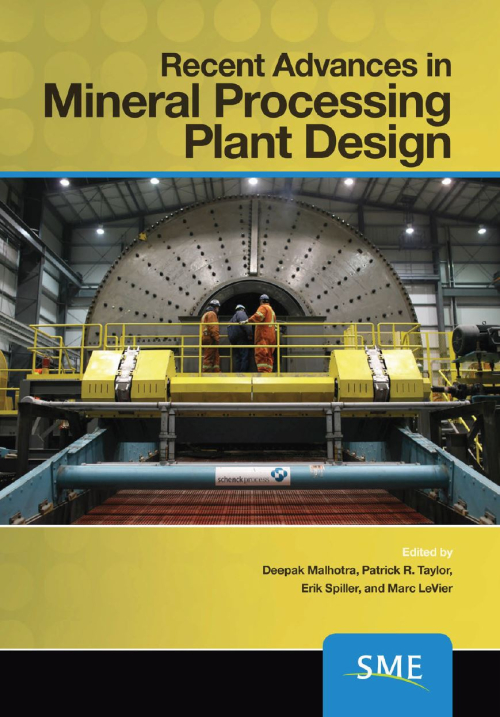
In 1963 the Chairman of Metallurgical Engineering at Queen’s University of Kingston, Ontario, Canada encouraged me to apply for a position in his department. This led to an appointment as an Assistant Professor of Metallurgical Engineering with a mandate to teach undergraduate and graduate courses in Mineral Process Engineering. Graduating metallurgists take positions available to them in the mining industry and mill “metallurgists” were in strong demand. Discussions with industry-oriented colleagues at the Department of Energy, Mines and Resources (Mines Branch) and with senior operators and plant design personnel at conferences such as the Conference of Metallurgists provided details of jobs available Canada-wide. This helped to fortify course content.
It is increasingly apparent that faults are typically not discrete planes but zones of deformed rock with a complex internal structure and three-dimensional geometry. In the last decade this has led to renewed interest in the consequences of this complexity for modelling the impact of fault zones on fluid flow and mechanical behaviour of the Earth’s crust. A number of processes operate during the development of fault zones, both internally and in the surrounding host rock, which may encourage or inhibit continuing fault zone growth. The complexity of the evolution of a faulted system requires changes in the rheological properties of both the fault zone and the surrounding host rock volume, both of which impact on how the fault zone evolves with increasing displacement.
Uranium is one of the most important energyrelated materials, with current use almost entirely for generating electricity and a small proportion for producing medical isotopes. About 17% of the world’s electricity is generated from 440 nuclear reactors spread across 30 countries, and 8% of the total energy consumed globally comes from nuclear power (EIA 2007). Energy generated from U has a minimal “carbon footprint” and substitution of nuclear generated electricity for coal has been proposed to offset the additional emissions expected from the increase in energy anticipated in the future (Pacala & Socolow 2004). To meet the current and projected needs of the uranium industry, discovery of new deposits and development of new technologies for both exploration and processing are critical.
This volume brings together 36 of the manuscripts that were presented as oral or poster papers at the Third International Fluvial Sedimentology Conference hosted by Colorado State University in August, 1985. The conference was co-sponsored by the Society of Economic Paleontologists and Mineralogists and the U.S. Geological Survey with additional support and cooperation from Conoco, Inc., Rocky Mountain Energy, Mobil Corporation, the Rocky Mountain Section-SEPM, and the College of Forestry and Natural Resources and the Department of Earth Resources of Colorado State University.
RMG 8th Annual Mining and Exploration Investment Conference
Overview • Trends in Exploration Expenditures - Level of expenditure and key drivers • Current “Hot Spots” for Exploration • Trend in Discovery Rates - Metal found, Unit Discovery Costs for Au, Cu and U3O8 • Trends in conversion rates (from Discovery > Development) - Not all discoveries get mined, and those that do may take many years • Impact of changes in cut-off grade on available resources - Resources can significantly grow with lower cut-off grades ...needs economies of scale, innovation in technology and higher prices to happen • Are we finding enough metal ? – Implications on long run commodity prices • Conclusions